
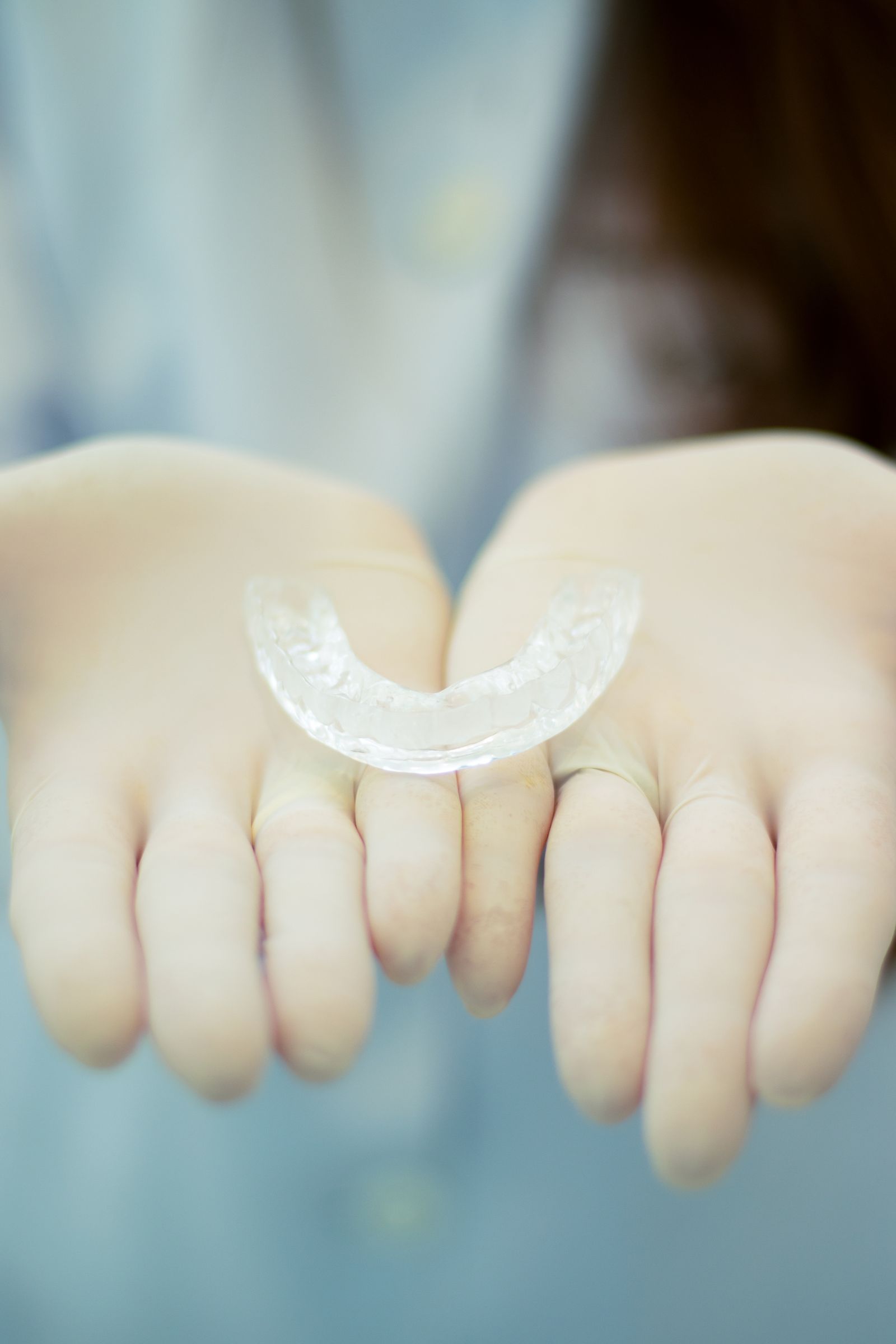
“My braces are off, so I’m done, right?” This is the first question almost everyone asks when orthodontic treatment ends. The short answer: the stage that moves your teeth is over, but the stage that protects the result is just beginning. In this article we explain, in plain language, what retention after braces is, how removable and fixed retainers are used, how long retention lasts and how to look after your retainer.
What is retention after braces?
Retention is the stage of treatment that keeps teeth in the new position they were moved to with braces or clear aligners. The appliance used in this stage is called a retainer.
Retention is not a separate procedure added on to orthodontic treatment; it is the final and lasting part of it. Retainers hold the teeth in place while the gums and bone around them adapt to the new position.
Why do teeth tend to move back?
Teeth are attached to the jawbone by a thin fibrous tissue called the periodontal ligament. During treatment these fibres and the surrounding bone remodel. When braces come off, these structures have not yet fully adapted to the new position.
The slowest structures to adapt are the fibres in the upper part of the gum (supracrestal fibres). According to the British Orthodontic Society’s clinical guidance, these fibres can stay stretched for more than seven months after tooth movement ends. That is why longer retention is recommended for teeth that were rotated and for gaps that were closed.
Pressure from the tongue, lips and cheeks, continued growth and natural age-related changes also play a role. Long-term studies from the University of Washington have shown that the tendency for lower front teeth to become crowded can continue into a person’s 20s and 30s.
Types of retainers
Clear removable retainer
A thin, clear, removable tray that fits over the teeth. It is barely noticeable and easy to clean. It is taken out for meals; while it is in, only drink water.
Fixed (bonded) retainer
A thin wire bonded to the inner (tongue-side) surface of the front teeth. It cannot be seen from outside and there is no risk of forgetting to wear it. On the other hand, plaque can build up around the wire, so it needs careful cleaning with an interdental brush or floss threader.
Hawley retainer
A traditional removable retainer made of an acrylic plate that fits against the palate and a wire that runs across the front teeth. It is durable and is preferred in some cases.
Science does not give a clear answer as to which type is better. A 2023 Cochrane review of 47 studies with 4,377 participants found that the certainty of the evidence was low and that no method could be said to be clearly superior to another. The choice is therefore made together with your dentist, based on the original problem, the condition of your gums and your habits. Some patients use a fixed retainer and a clear retainer together.
How does retention work? Step by step
- Before the brackets are removed or the last aligner is finished, an intraoral scan or impression is taken.
- The brackets are removed and the tooth surfaces are cleaned and polished.
- If planned, a fixed retainer is bonded to the inner surfaces of the teeth.
- The clear retainer is handed over, and you are shown how to put it in, take it out and store it.
- In the first period, the retainer is usually worn all day except for meals and brushing.
- At check-ups the position of the teeth is monitored and wear time is gradually reduced.
- In the long term, night-time wear continues as often as your dentist recommends.
How long do you need to wear a retainer?
Your dentist decides the exact duration; it depends on the original problem and the type of retainer. The general approach is almost full-time wear in the first months, then every night, and later night-time wear at intervals your dentist recommends.
The American Association of Orthodontists (AAO) stresses that teeth tend to move back towards their old position even after treatment, so retention should be thought of as long term, even if wear becomes less frequent. In short, the honest answer to “How long will I wear it?” is: for as long as you want your teeth to stay straight.
If your retainer feels tight, breaks or gets lost
- If the retainer feels slightly tight but does not hurt, your teeth may have shifted a little. Keep wearing it and let your dentist know.
- If the retainer does not fit at all, do not force it; book a check-up.
- If it breaks or gets lost, ask for a new one without delay; teeth can shift on the days without a retainer.
- If a fixed retainer has loosened or come away from a tooth, that tooth may move; come in for a check-up soon.
Caring for your retainer
- Clean the retainer every day with lukewarm water and a soft brush; hot water can warp it.
- Instead of abrasive toothpaste, use a gentle cleaner recommended by your dentist.
- Do not drink sugary or acidic drinks while wearing the retainer; the liquid stays in contact with your teeth under it for a long time.
- Do not wrap the retainer in a napkin or put it in your pocket; always keep it in its case.
- Clean around a fixed retainer every day with an interdental brush or floss threader.
- Do not skip check-up appointments.
What affects the cost of retention?
The cost of retention varies from person to person. The main factors are the type of retainer (clear, fixed or both), whether one or both jaws are treated, whether a digital scan is used, the need for a spare retainer, and replacement after breakage or loss. We share the plan that suits you and its cost clearly after an examination.
Frequently asked questions
If I don’t wear my retainer, how quickly will my teeth shift?
It varies from person to person. The risk is highest in the first months, because the gum fibres and bone have not yet adapted to the new position. If your retainer feels tight after a few nights without it, your teeth may have started to move. In that case, contact your dentist.
Does a fixed retainer stay in for life?
In many patients it can stay in place for many years; your dentist decides when it should be removed. As long as it is kept clean and checked regularly, it can stay in place. If you notice it has loosened or broken, come in for a check-up.
Do I need a retainer after clear aligner treatment too?
Yes. Whether teeth were moved with braces or clear aligners, the tissues need time to adapt to the new position. That is why retention is also planned at the end of clear aligner treatment.
Is it hard to speak and sleep with a retainer?
In the first days you may notice a slight lisp and a feeling of pressure. Most people get used to it within a few days, and night-time wear soon becomes routine.
My teeth have shifted slightly. Will the retainer fix it?
Retainers are designed to hold teeth in place, not to move them. They may help with very slight shifts; more noticeable shifting may need a new orthodontic assessment.
Retention check-ups after braces in Bursa
Retention after braces is the stage that protects the result you worked for during orthodontic treatment. If your treatment has just ended, or your retainer has broken, been lost or no longer fits, a check-up will clarify the condition of your teeth. You can call either of our branches to book an appointment, and we will find a suitable day and time together.
Korupark Branch (Osmangazi): +90 224 243 00 44 · WhatsApp +90 532 497 11 17
Ataevler Branch (Nilüfer): +90 224 503 66 00 · WhatsApp +90 552 503 66 00
Korudiş Dental Team
This article is for general information; the right treatment for you can only be decided by your dentist after an examination.