
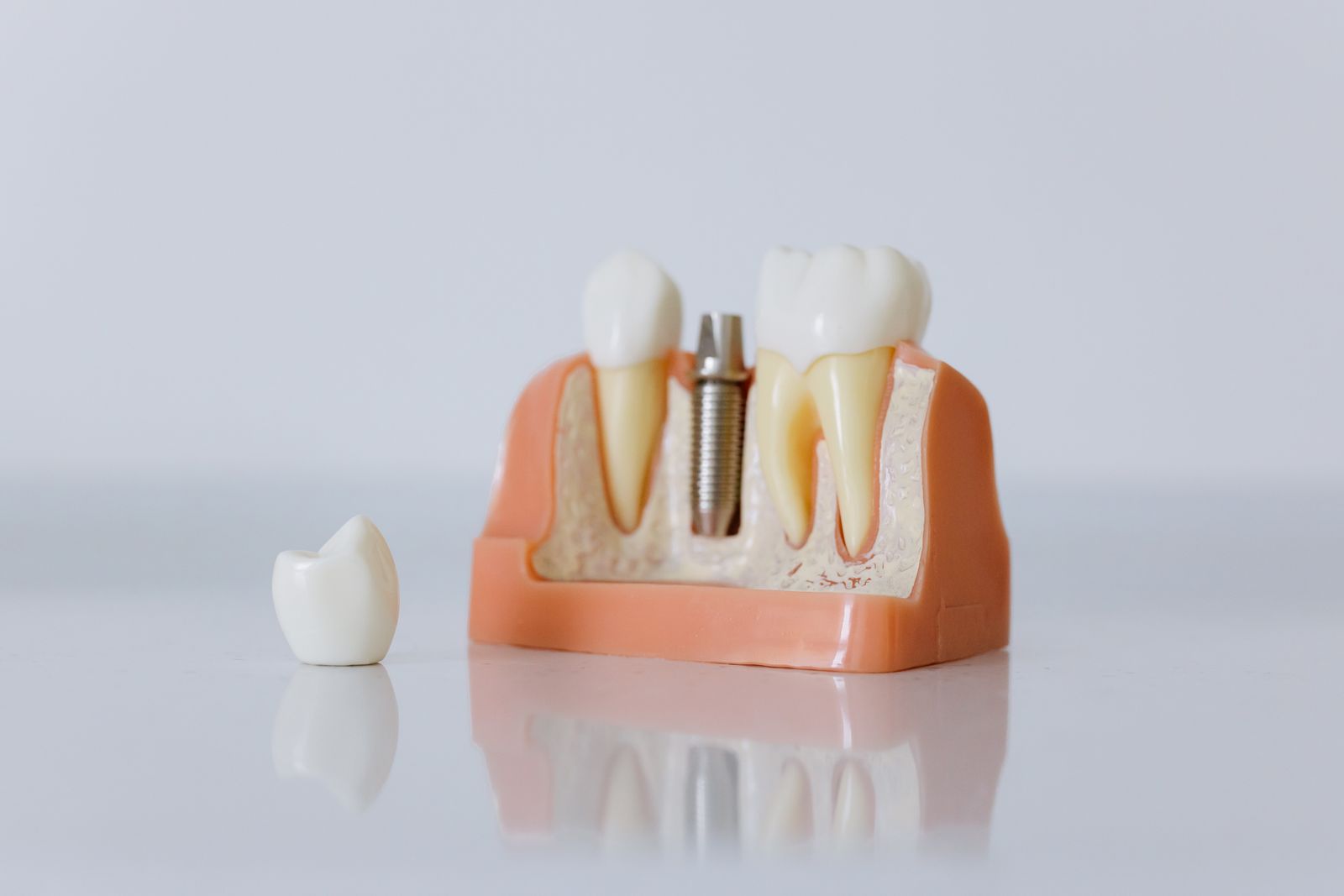
A missing tooth affects not only your smile but also chewing, speech and, over time, the position of neighbouring teeth. Dental implant treatment consists of a titanium screw placed in the jawbone in place of the lost tooth’s root, and a tooth made on top of it. It offers a stand-alone solution without touching the neighbouring teeth.
In short
- An implant consists of the screw (root), a connecting part (abutment) and the crown on top.
- The process starts with an examination and imaging; the implant is placed under local anaesthetic.
- The implant usually takes 2–4 months to fuse with the bone; the permanent tooth is then fitted.
- If there is not enough bone, extra procedures such as bone grafting or a sinus lift may be planned.
What is a dental implant?
An implant is a small screw made of body-compatible titanium that takes over the role of the natural tooth root. Once placed in the bone, it fuses with the bone over time (osseointegration). When this fusion is complete, a porcelain or zirconia crown is made on top, and the tooth functions much like a natural tooth.
Who can have implants?
Almost anyone whose jaw has finished growing and whose general health allows a surgical procedure can be assessed for implants. Your dentist will look at:
- The height and width of the jawbone
- Gum health and oral hygiene
- Conditions that may affect healing, such as uncontrolled diabetes
- Smoking (it can slow healing)
The implant process step by step
- Examination and imaging: Your mouth is examined and the bone is assessed with a panoramic X-ray and, if needed, a 3D CT scan.
- Planning: The length, diameter and angle of the implant are planned; any extra procedures are decided.
- Placing the implant: The area is numbed with local anaesthetic and the implant is placed in the bone. For a single implant, the procedure is usually short.
- Healing and fusion: There is usually a wait of 2–4 months for the implant to fuse with the bone. A temporary tooth can be used during this time.
- Fitting the permanent tooth: An impression is taken and the permanent crown is made on the implant.
What should you pay attention to after the procedure?
- Apply a cold compress on the first day and avoid hot and hard foods.
- Use the medicines and mouthwash your dentist recommends regularly.
- Do not smoke in the first days.
- Do not miss your follow-up appointments.
Frequently asked questions
Will I feel pain during the procedure?
Because the implant is placed under local anaesthetic, pain is usually not felt during the procedure. There may be mild tenderness and swelling for the next few days; this is managed with the recommended medicines.
How long does an implant last?
With good oral care and regular check-ups, implants can be used for many years. Brushing, cleaning between the teeth and avoiding smoking directly affect how long they last.
Can I have an implant if I don’t have enough bone?
In most cases, yes. Room for the implant can be prepared with procedures such as bone grafting or a sinus lift. In advanced bone loss, different implant techniques can also be considered.
Implants at Korudiş
At our Korupark and Ataevler branches, implant treatment is planned by our dentists experienced in oral and maxillofacial surgery. For details, see our implants and oral surgery page or book an appointment.
This article is for general information. A personal diagnosis and treatment plan require an examination.
This article has been medically reviewed by Dt. İlhan Şirin. · November 2026