
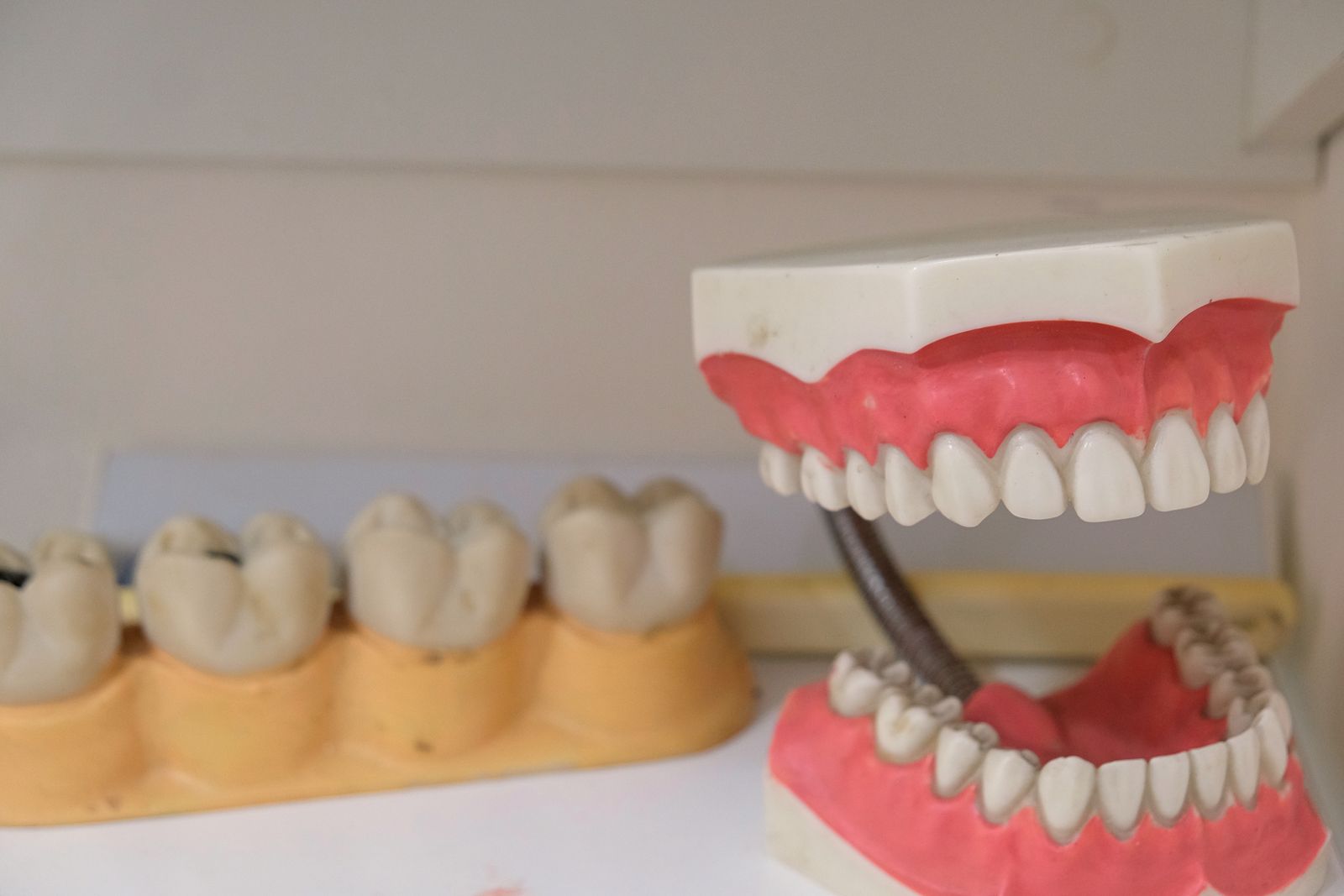
A removable prosthesis used when all the teeth in a jaw are missing is called a complete denture or full denture. It aims to restore chewing, speech and the support of the lips and cheeks.
In short
- A complete denture is a removable prosthesis for jaws with no teeth.
- It is usually completed in 4–5 visits: impressions, bite registration, try-in and fitting.
- Getting used to it can take a few weeks; sore spots in the first days are common and are adjusted at a check-up.
- A lower denture moves more than an upper one; implant-supported options can improve retention.
Who is it for?
It is made for people with no teeth left in the upper jaw, the lower jaw or both. If a few teeth remain, a partial denture or other options are considered. If teeth need to be extracted, a temporary (immediate) denture can be used during healing.
How is a complete denture made?
- Examination and first impression: The tissues and bone are assessed and a first impression is taken.
- Detailed impression: A detailed impression of the tissues is taken with a tray made for you.
- Bite registration: The relationship of the upper and lower jaws, tooth length and lip support are determined.
- Try-in: The teeth are set in wax; appearance, shade and bite are checked together in the mouth.
- Fitting and check-up: The denture is fitted and use and care are explained. Sore spots are checked in the following days.
Getting used to it
- In the first days the denture may feel bulky, saliva may increase and speech may change; these usually settle quickly.
- Start with soft foods, small bites and chewing on both sides together.
- If the denture rubs somewhere, do not try to adjust it yourself; come for a check-up.
- Reading aloud helps you get used to speaking.
How should you care for it?
- Take the denture out and rinse it after every meal, and clean it once a day with a denture brush.
- Take it out at night and keep it in clean water or a denture cleaning solution; the tissues need to rest.
- Do not use hot water; the denture can distort.
- Clean your gums and tongue with a soft brush.
- Even without teeth, come for a check-up at least once a year.
My lower denture moves. What can be done?
In the lower jaw the area the denture sits on is narrow, and tongue movements can dislodge it. As the bone shrinks over time, the fit also decreases. In that case, relining the denture or dentures supported by 2–4 implants can be considered; implant-supported dentures stay more stable when chewing.
What affects the cost?
Under Turkish health regulations we do not publish prices on our website. The cost of a complete denture depends on:
- Whether one jaw or both are treated
- The tooth and base materials used
- Whether extractions, bone smoothing or a temporary denture are needed first
- Whether it is a conventional or an implant-supported denture
- Relining and repairs needed later
After your examination you receive a written treatment plan.
Frequently asked questions
What is a “suction” denture?
A well-fitting upper complete denture already holds by suction, thanks to the thin layer of saliva between it and the palate. The term “suction denture” is mostly used for dentures whose borders are specially shaped, or whose inner surface has a soft lining, to increase this retention. In the lower jaw the seating area is narrow, so suction is limited; for patients whose lower denture moves, an implant-supported denture is also considered. Which method suits you is decided at an examination, based on your bone and tissues.
How many visits does a complete denture take?
Usually 4–5 visits, with laboratory work in between. If extractions are needed, healing time is added.
Can I eat everything with dentures?
Once you are used to them, you can eat most foods. Very hard and sticky foods can dislodge the denture; cutting food smaller is more comfortable than biting with the front teeth.
Can I wear my denture at night?
Taking it out at night is recommended. Resting the tissues reduces the risk of fungal infection and sores.
When should a complete denture be replaced?
Because the jawbone changes over time, the fit decreases. When it becomes loose, rubs or the teeth wear, relining or replacement may be needed; your dentist assesses this at your yearly check-up.
Does SGK cover the cost of complete dentures?
No. Korudiş is a private healthcare provider, and SGK (the Turkish Social Security Institution) does not pay for dentures made at our clinic. For current practice at public health facilities, you can ask SGK or a public Oral and Dental Health Centre.
Prosthetic treatment at Korudiş
At our Korupark and Ataevler branches, complete and implant-supported dentures are made after an examination and planning. For details, see our prosthetic treatments page or book an appointment.
This article is for general information. A personal diagnosis and treatment plan require an examination.
This article has been medically reviewed by Dt. İlhan Şirin. · November 2026