
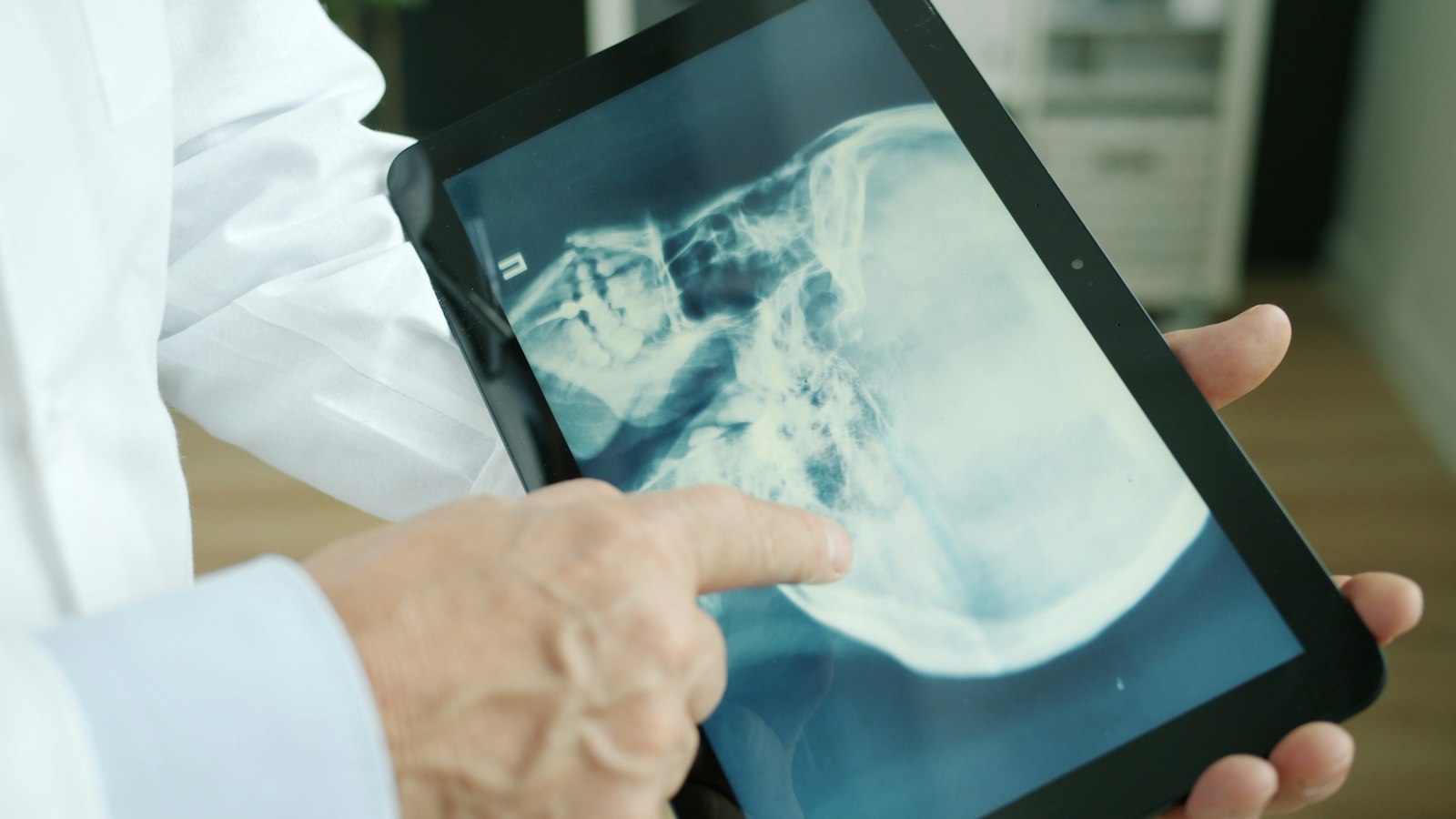
Some bite problems come not only from the teeth but from the size or position of the jawbones. In adults whose growth is complete, such severe problems may not be correctable with braces alone. Orthognathic surgery, commonly known as jaw surgery, is a treatment planned together with orthodontics in these cases. In this article we explain who needs it, why orthodontic treatment continues before and after the operation, and how the process works.
What is orthognathic surgery?
Orthognathic surgery is the surgical repositioning of the upper jaw, the lower jaw or both into the correct position. While orthodontics moves the teeth within the bone, orthognathic surgery moves the bone itself. The operation is performed in hospital under general anaesthetic by an oral and maxillofacial surgeon. Because the incisions are mostly made inside the mouth, no visible scar is left on the face.
Who needs it?
- Adults with a marked receding jaw or prominent lower jaw.
- People whose front teeth do not meet (open bite) and who therefore have difficulty biting.
- People with noticeable facial asymmetry or a shifted jaw.
- People with chewing, speech or tooth wear problems caused by a bite problem.
Surgery is planned after growth is complete. In growing children, functional orthodontic treatment is considered first.
Why are braces fitted before surgery?
When the jaws are moved to the correct position, the teeth also need to fit together properly. That is why, before the operation, the teeth are aligned with fixed braces to suit the new position of the jaws. This phase usually takes 12–18 months. During pre-surgical orthodontics the teeth may look worse for a while; this is part of the plan and is corrected with the operation.
The operation
The operation usually takes a few hours. Most patients stay in hospital for one or two nights afterwards. There is swelling in the first weeks, and eating continues with liquid or soft foods; returning to a normal diet can take a few weeks. After lower jaw surgery there may be reduced sensation in the lower lip and chin for a while; in most patients this improves over time.
Orthodontics after surgery
After the operation, braces continue for a few more months for the final fine-tuning of the teeth. Elastics may be used at this stage to guide the bite. When treatment is finished, retainers are used to keep the teeth in their new position.
How long does it take in total?
Taking pre-surgical orthodontics, the operation and post-surgical orthodontics together, the whole process usually takes two years or more. The duration varies according to the type of problem and the person’s healing.
Before starting treatment
- Teeth and gums need to be healthy; decay and gum disease are treated first.
- If lower jaw surgery is planned, wisdom teeth may need to be removed a few months before the operation.
- For smokers, stopping smoking before and after the operation is important for healing.
- The orthodontist and the surgeon plan the treatment together; a surgical consultation takes place before pre-surgical orthodontics begins.
Frequently asked questions
Does jaw surgery leave a scar on the face?
Because the incisions are mostly made inside the mouth, no visible scar is left on the face.
Can it be corrected with braces without jaw surgery?
In mild to moderate cases, the position of the teeth can be compensated with orthodontics. In severe skeletal problems surgery may be more appropriate; the decision is made after the records are reviewed.
When can I return to work after surgery?
Most patients return to daily life within a few weeks. The time varies with the type of operation and healing.
At what age is jaw surgery done?
It is done once jaw growth is complete; this usually happens earlier in girls than in boys. The right time is determined with X-rays and follow-up.
Will my jaws be wired shut after surgery?
Today the bones are usually fixed with small plates and screws, so wiring the jaws shut for a long time is usually not necessary; elastics may be used to guide the bite.
Orthodontic assessment for orthognathic surgery in Bursa
If you think you have a problem with your jaw position, the first step is an orthodontic examination; if needed, a surgical consultation is planned together. You can also read about types of braces and book an appointment at our branches in Bursa:
Korupark Branch (Osmangazi): +90 224 243 00 44 · WhatsApp +90 532 497 11 17
Ataevler Branch (Nilüfer): +90 224 503 66 00 · WhatsApp +90 552 503 66 00
Orthodontic treatment is provided at our Ataevler (Nilüfer) branch; you can also book by calling either branch.
Korudiş Dental Team
This article is for general information; the right treatment for you can only be decided by your dentist after an examination.