
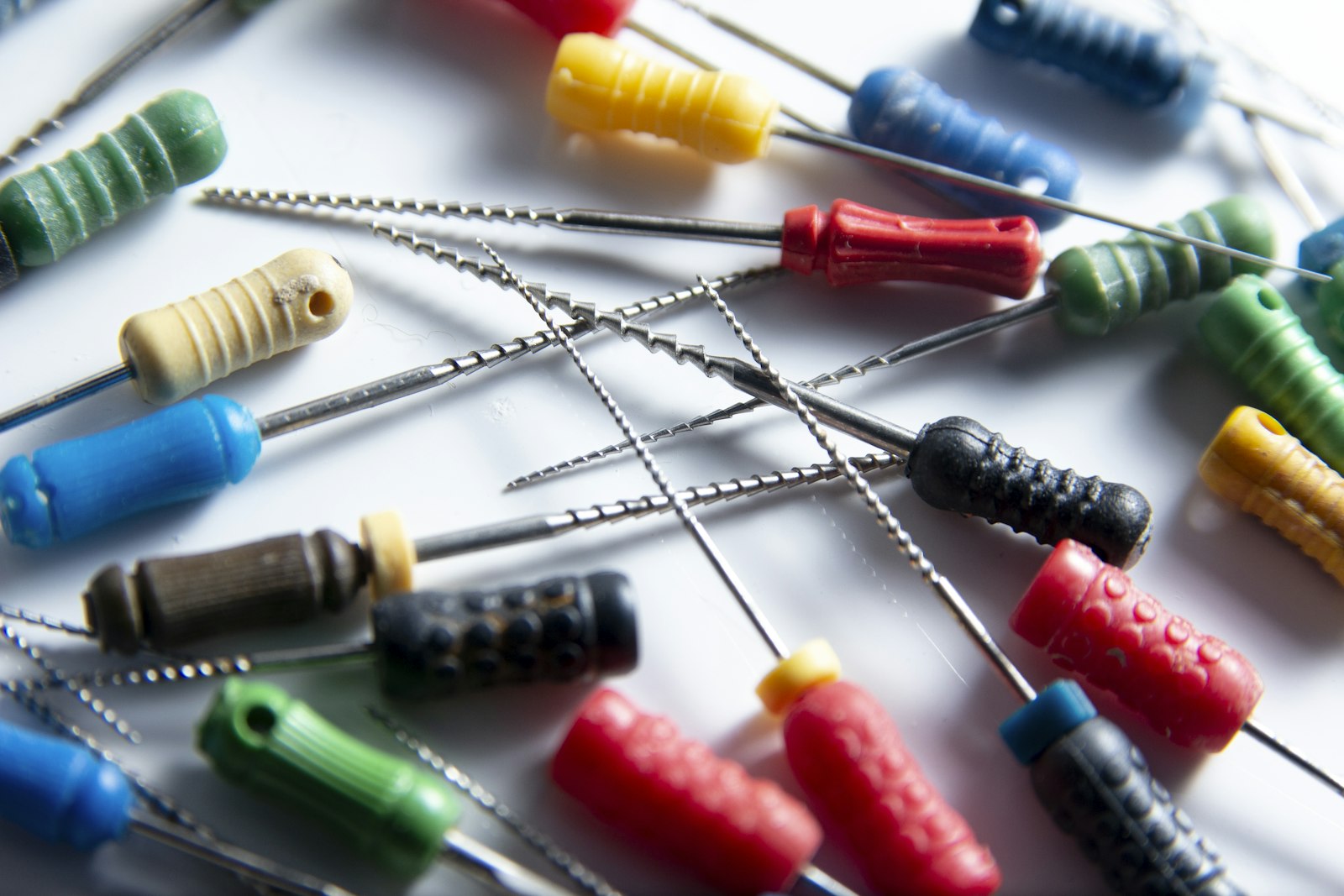
At the final stage of root canal treatment, the cleaned canals need to be filled so that they are sealed. In recent years, bioceramic and MTA-based materials have come into common use at this stage. Our patients also ask, “What is a bioceramic root canal filling, and can it be used for my tooth?” In this article we have gathered the answers we give at our Korupark and Ataevler branches in Bursa.
Why is the root canal filling important?
In root canal treatment, inflamed or dead tissue inside the tooth is removed, and the canals are shaped and disinfected. The canals are then filled to stop bacteria from getting back in. A root canal filling usually has two parts: a rubber-like material that fills the canal (gutta-percha) and a sealer that closes the gaps between it and the canal wall.
When people say bioceramic root canal filling, they usually mean that this sealer is bioceramic-based.
What is a bioceramic?
Bioceramics are calcium silicate-based materials developed to be compatible with body tissues. The main features of bioceramic sealers used in root canal treatment are:
- Tissue compatibility: Well tolerated by the surrounding tissues.
- Setting in moisture: Uses the natural moisture inside the canal to set.
- Dimensional stability: Does not shrink noticeably as it sets.
- An environment hostile to bacteria: The alkaline environment created as it sets makes it harder for bacteria to multiply.
What is MTA and when is it used?
MTA (mineral trioxide aggregate) is a long-established member of the bioceramic family. Besides root canal filling, it is preferred especially in difficult situations:
- Closing the root tip of teeth whose roots have not finished developing and remain open
- Repairing perforations in the canal wall
- Treatments aimed at preserving the nerve in living teeth where the nerve has been exposed
- Filling the root tip during root-end surgery
Which teeth is it preferred for?
Bioceramic sealers are often preferred in wide or irregular canals, teeth with inflammation at the root tip and root canal re-treatments. Which material is used is decided by assessing the condition of the tooth, the shape of the canal and X-ray findings.
Are there any disadvantages?
As with every material, bioceramics have aspects to keep in mind:
- Once set, they are harder to remove from the canal. If the root canal needs re-treatment or a post needs to be placed in the canal later, this may take more time.
- Some types of MTA can discolour the tooth over time. For this reason, material choice is made carefully for front teeth.
A bioceramic material alone does not determine success. Thorough cleaning of the canal, disinfection and the quality of the restoration placed on the tooth afterwards are at least as important as the material.
How is the tooth protected after root canal treatment?
A root-canal-treated tooth, especially a back tooth, can become brittle over time. Placing a suitable filling, onlay, overlay or crown on the tooth after treatment helps prevent both fracture and bacteria leaking back into the canal. Do not wait long with a temporary filling.
What affects the cost?
The cost depends on the number of canals in the tooth, whether it is a first treatment or a re-treatment, whether repair with MTA is needed and the restoration that follows. We share the plan that suits you and its cost clearly after the examination and X-rays.
Frequently asked questions
Is a bioceramic root canal filling different from normal root canal treatment?
The steps of the treatment are the same. The difference is that the sealer used to close the canals is bioceramic-based.
Does MTA harm the tooth?
MTA is a material that is compatible with the tissues. Because some types can discolour the tooth, a suitable type is chosen, especially for front teeth.
Can a tooth with a bioceramic filling be re-treated?
Yes, but because the material is hard, re-treatment may take longer and requires experience.
How many sessions does root canal treatment take?
It can take one or several sessions depending on the condition of the tooth. In inflamed teeth, medication may be left in the canals between visits and the canals filled at the next session.
Why is a crown recommended after root canal treatment?
In root-canal-treated back teeth the walls thin and the tooth can become prone to fracture. An onlay, overlay or crown helps protect the tooth against this risk.
Root canal treatment examination in Bursa
If you have a dull ache, pain at night, lasting sensitivity to hot and cold or swelling in the gum, get examined without waiting. You can book an appointment at our two branches in Bursa:
Korupark Branch (Osmangazi): +90 224 243 00 44 · WhatsApp +90 532 497 11 17
Ataevler Branch (Nilüfer): +90 224 503 66 00 · WhatsApp +90 552 503 66 00
Korudiş Dental Team
This article is for general information; the right treatment for you can only be decided by your dentist after an examination.