
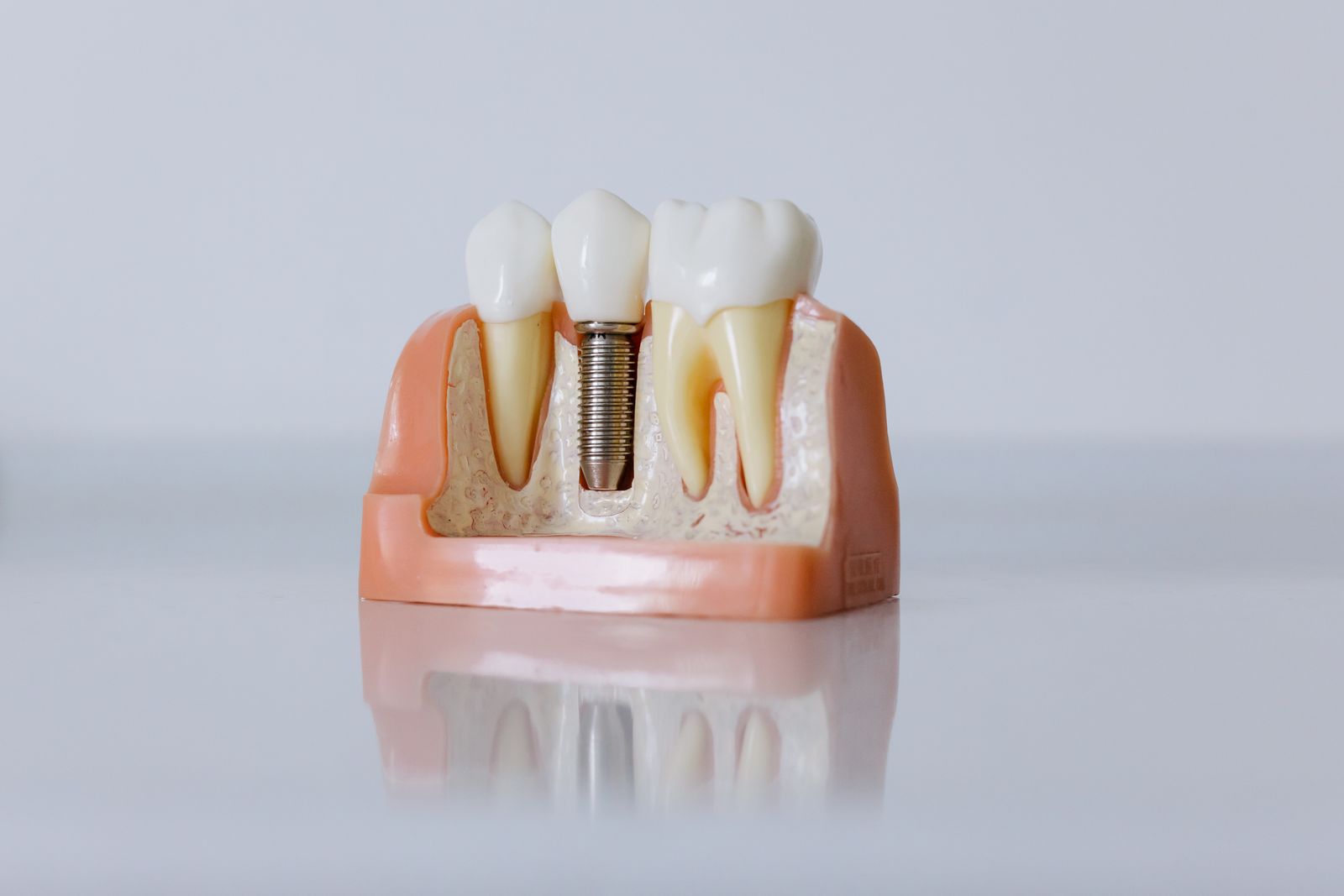
There are two common ways to replace a missing tooth: an implant and a bridge. The question implant or bridge has no single answer for everyone; the decision depends on the bone, the neighbouring teeth and general health.
In short
- With an implant, a screw is placed in the bone in place of the missing tooth; the neighbouring teeth are not touched.
- With a bridge, the teeth on either side of the gap are reduced and joined crowns are fitted over them.
- An implant involves surgery and healing time; a bridge is completed sooner.
- With both, care and regular check-ups are essential for a long life.
What kind of solution is an implant?
An implant is a titanium screw that replaces the tooth root. After it fuses with the bone, a tooth is made on top. The neighbouring teeth stay as they are, and because chewing forces are passed to the bone, it helps preserve the bone in that area.
What kind of solution is a bridge?
A bridge uses the teeth on either side of the gap as supports. These teeth are reduced and a one-piece restoration that also fills the gap is cemented on. It needs no surgery and is usually completed in 1–2 weeks.
When is each considered?
- If the neighbouring teeth are sound and unfilled, an implant may be favoured so they are left untouched.
- If the neighbouring teeth already need large fillings or crowns, a bridge can be a sensible option.
- If there is not enough bone and extra surgery is not wanted, a bridge can be considered.
- If general health does not allow surgery, a bridge may be preferred.
- If several teeth are missing, implant-supported bridges can also be planned.
The difference in care
The area around an implant is brushed like a natural tooth and cleaned with an interdental brush. With a bridge, the area under the false tooth must be cleaned with special floss or an interdental brush; otherwise decay and gum problems can develop around the supporting teeth.
Frequently asked questions
Which lasts longer, an implant or a bridge?
Both can be used for many years with good care. A bridge’s life depends on the health of the supporting teeth; an implant’s depends on the health of the gum and bone around it.
Are healthy teeth cut down for a bridge?
Yes, the supporting teeth are reduced so the bridge can fit. That is why the implant option is always considered for patients with sound neighbouring teeth.
How long should I wait after an extraction?
Waiting a long time can cause the bone to thin and the neighbouring teeth to drift into the gap. Planning soon after the extraction is recommended.
Can I switch from a bridge to an implant later?
In most cases, yes; however, the teeth reduced for the bridge need to be crowned again and the bone is reassessed.
Replacing missing teeth at Korudiş
At our Korupark and Ataevler branches, both options are assessed with you after an examination and imaging. For details, see our dental implants and prosthetic treatments pages or book an appointment.
This article is for general information. A personal diagnosis and treatment plan require an examination.
This article has been medically reviewed by Dt. İlhan Şirin. · November 2026