
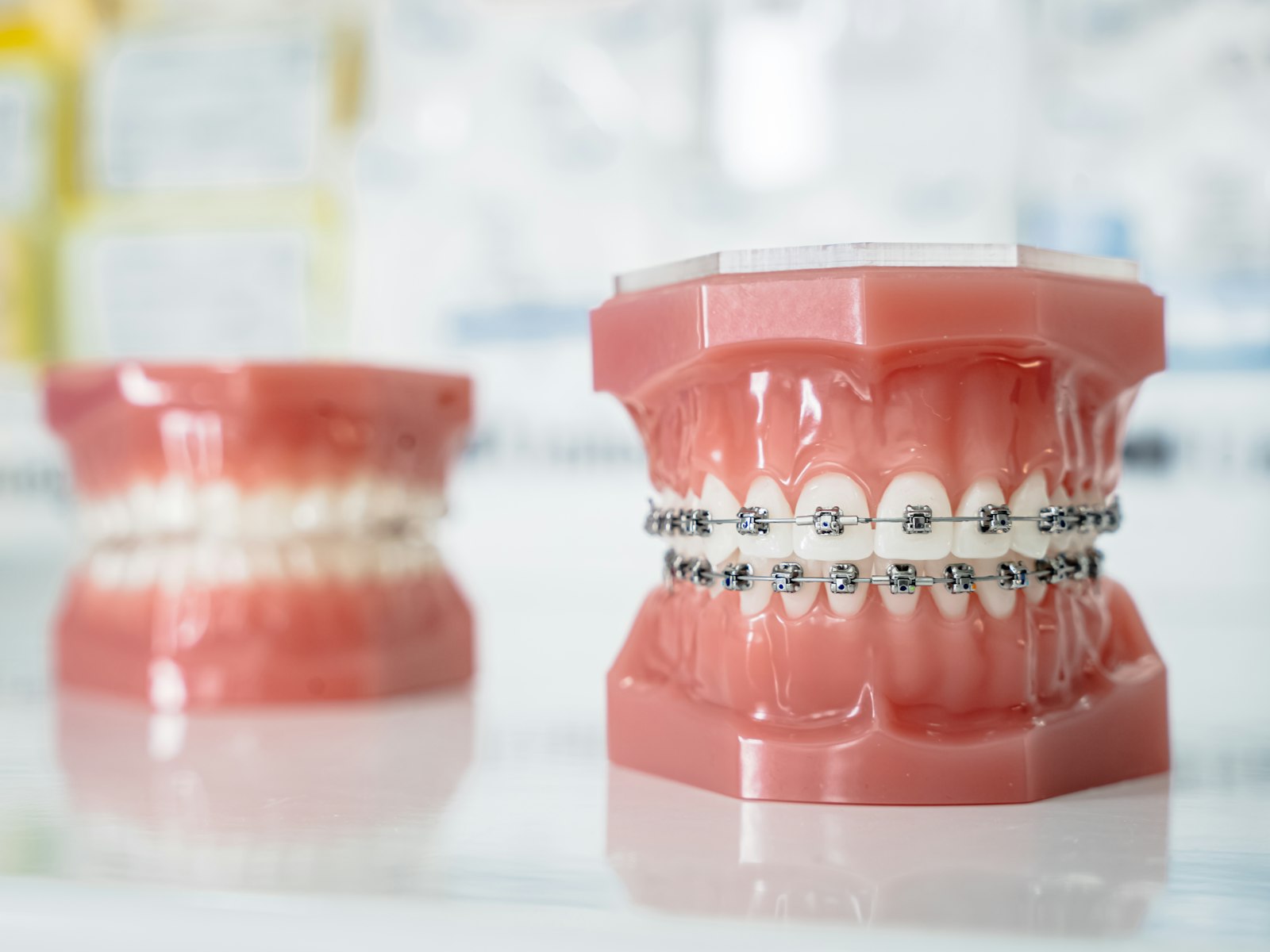
When you decide on orthodontic treatment, one of the first questions is “Which braces will I have?” The most common types of braces are metal brackets, ceramic (aesthetic) brackets and self-ligating brackets. For those who do not want braces at all, there is also the option of clear aligners. In this article we explain the differences between them, who each may suit and what is considered when choosing. We have gathered the questions most often asked by patients who come to our Bursa branches for an orthodontic consultation.
How do braces work?
Braces consist of small pieces bonded to the teeth (brackets) and a wire that runs through them. The wire applies a light, continuous force to the teeth, and with this force the teeth slowly move within the bone. The type of bracket does not on its own determine how the teeth will move; the real difference comes from the treatment plan and the orthodontist’s adjustments. The choice of bracket mainly affects appearance, comfort and ease of care.
Metal braces
This is the longest-used and most common type of braces. They are made of stainless steel and are small and durable. The wire is usually held to the brackets with small coloured or clear elastic ties, which are changed at every check-up.
- Durable, with a low risk of breakage.
- Can be used at any age and for all kinds of tooth alignment problems.
- Being visible can be a drawback for some adults.
Ceramic (aesthetic) braces
These are made of tooth-coloured or near-clear ceramic material and are much less noticeable than metal brackets from a distance. They are especially popular with working adults and people who care about appearance.
- They match the tooth colour, so they attract less attention.
- The ceramic bracket itself does not change colour, but the clear elastic ties used to hold the wire can stain with tea, coffee and smoking.
- They can be slightly larger and more fragile than metal brackets, so more care is needed with hard foods.
- They are usually preferred on the upper front teeth, in the area visible when smiling.
Self-ligating braces
In these brackets the wire is held not by an elastic but by a small built-in clip or door. They can be made of metal or ceramic. Because no elastic ties are used, less plaque may build up around the brackets, and wire changes at check-ups can be quicker.
The commonly heard claims that self-ligating brackets “shorten treatment and cause less pain” have not been clearly supported by research. It is therefore more accurate to see these brackets not as a promise of “faster treatment” but as an option that offers comfort and easier care.
Clear aligners
For those who do not want wires and brackets, removable clear aligners can be an option. Aligners need to be worn 20–22 hours a day and are removed for eating. They are not suitable for every alignment problem. You can find details in our clear aligner treatment article.
Which braces are right for me?
- If appearance matters to you: ceramic brackets or clear aligners.
- If you love hard foods or play sports: metal brackets are more durable.
- For children and teenagers: metal brackets are usually preferred; coloured elastics can make treatment fun for children.
- For complex alignment problems or when jaw surgery is planned: fixed brackets allow more controlled movement.
The final decision is made at the consultation, considering the condition of your teeth and your expectations together.
Caring for your braces
- Brush your teeth after every meal, paying attention to the areas around the brackets.
- Use interdental brushes and orthodontic floss.
- Avoid hard (nut shells, ice) and sticky (toffee, chewing gum) foods.
- If a bracket comes off or a wire is poking, call our branch without delay.
What affects the cost of braces?
The fee varies according to the type of bracket chosen, the complexity of the treatment and its duration. We share the plan that suits you and its fee clearly after the orthodontic consultation.
Frequently asked questions
Do ceramic braces turn yellow?
The ceramic brackets themselves do not change colour. The clear elastic ties holding the wire may discolour; these are replaced at every check-up.
Do self-ligating brackets shorten treatment?
Research has not shown that self-ligating brackets significantly shorten treatment time. What really determines treatment time is the condition of the teeth and the treatment plan.
At what age can braces be fitted?
There is no strict age limit for braces. In children they can be fitted after the permanent teeth have come in, and in adults as long as the teeth and gums are healthy.
Do braces hurt?
When braces are first fitted and after adjustments, you may feel pressure and tenderness for a few days. This feeling usually passes quickly.
How many months do braces take?
The duration depends on the condition of the teeth; most treatments are completed within a few months to a few years. The estimated duration is shared at the consultation.
Orthodontic consultation for braces in Bursa
Which braces suit your teeth is determined after an orthodontic consultation and records. You can book an appointment at our branches in Bursa:
Korupark Branch (Osmangazi): +90 224 243 00 44 · WhatsApp +90 532 497 11 17
Ataevler Branch (Nilüfer): +90 224 503 66 00 · WhatsApp +90 552 503 66 00
Orthodontic treatment is provided at our Ataevler (Nilüfer) branch; you can also book by calling either branch.
Korudiş Dental Team
This article is for general information; the right treatment for you can only be decided by your dentist after an examination.