
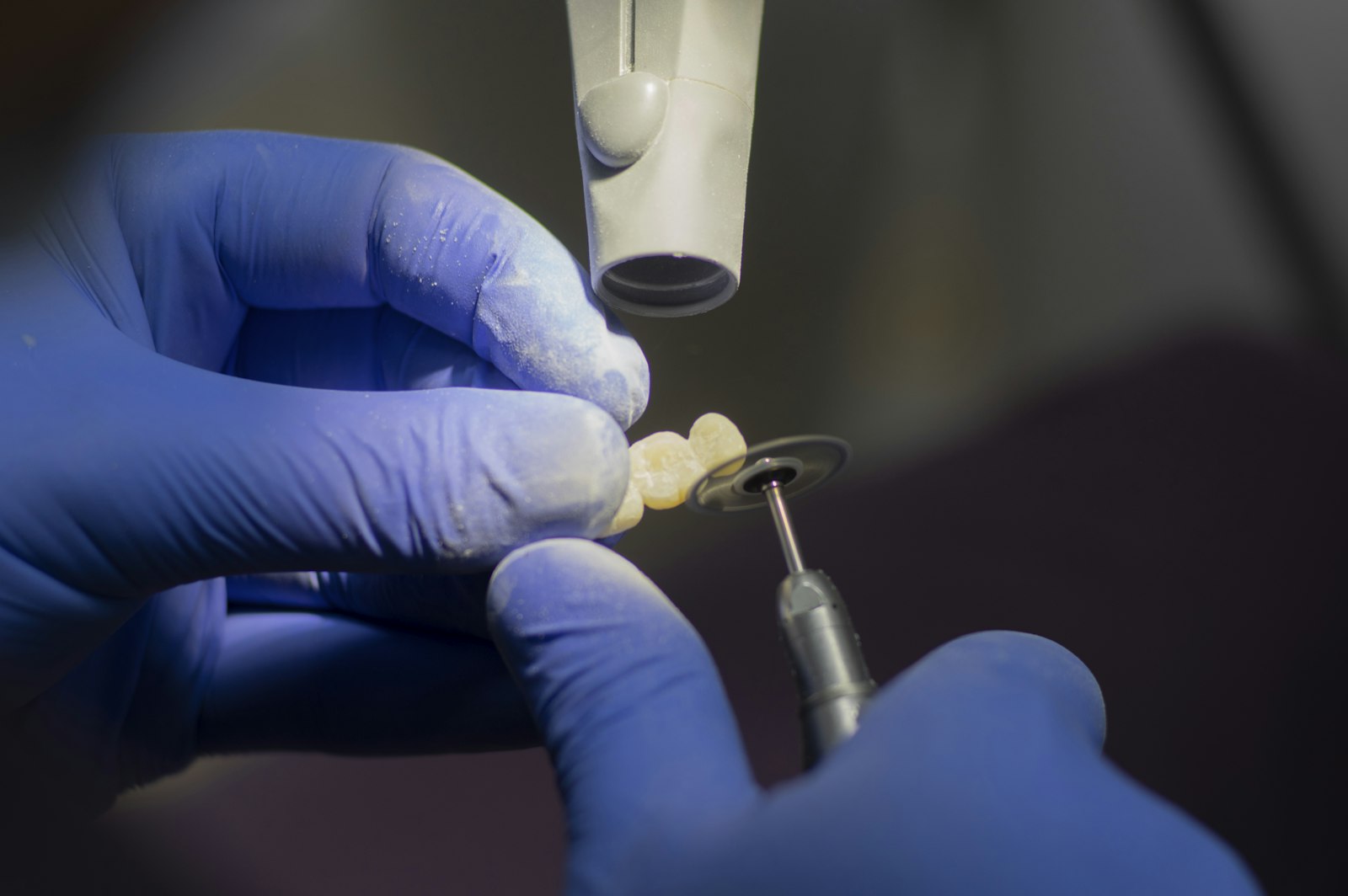
If you have a large cavity or fracture in a back tooth that is too big for a regular filling, but you do not want the tooth reduced a lot for a crown, inlays and onlays come into consideration. Also known as “porcelain fillings” or “ceramic fillings”, these restorations are made in a laboratory specifically for your tooth and bonded to it. In this article we answer the questions we are asked most often at our Korupark and Ataevler branches in Bursa.
What are inlays, onlays and overlays?
All three work on the same principle: the decay is removed, an impression of the tooth is taken, the missing part is made in the laboratory from ceramic or composite and bonded to the tooth. The difference is how much of the tooth they cover.
- Inlay: Fills the space between the cusps on the chewing surface. It does not extend over the cusps.
- Onlay: Also covers one or more cusps.
- Overlay: Covers the entire chewing surface. Some dentists also call it a “partial crown”.
How is it different from a regular filling?
A regular filling is placed into the tooth in the mouth in a soft state and hardened there. In a large cavity, this method may not support the thin walls around the tooth well enough. Inlays and onlays are made outside the mouth as a single piece, so the fit of the edges and the shape of the chewing surface are more controlled. Onlays and overlays also cover weakened cusps, helping to reduce the risk of fracture.
How is it different from a crown?
A crown covers the tooth on all sides, and some tooth structure must be removed from every surface for it. With onlays and overlays, only the damaged or weak parts are covered, and healthy tooth structure stays in place. That is why they are described as “the middle way between a filling and a crown”.
What is a protective ceramic crown?
In some teeth the loss is so great that an onlay or overlay is not enough. In this case a thin ceramic crown that wraps around the tooth and is bonded to it may be preferred. It is called “protective” because the aim is to protect the tooth from fracture rather than to change its appearance. It is considered especially for back teeth that have had root canal treatment and whose walls have thinned.
The choice depends on how much tooth structure remains, the thickness of the walls, the bite and any clenching habit. The aim is to choose the least intervention that will protect the tooth.
Who is it suitable for?
- People with a cavity or fracture in a back tooth too large to repair with a regular filling
- People whose old, large or leaking fillings are being replaced
- People whose tooth has weakened after root canal treatment
- People with a crack or fracture in a cusp
How is it done?
- Examination and X-ray: The depth of the decay and the nerve of the tooth are assessed.
- Preparation: Under local anaesthesia, the decay and old filling are removed and the tooth is shaped for the restoration. If the decay extends below the gum, deep margin elevation may be needed first.
- Impression: A conventional impression or a digital impression with an intraoral scanner is taken.
- Temporary filling: The tooth is protected with a temporary filling while the laboratory works.
- Bonding: The restoration is tried in, its fit is checked and it is bonded to the tooth. The bite is adjusted one last time.
It is usually completed in two sessions.
Which materials are used?
Ceramic (porcelain) restorations keep their colour and surface shine for a long time and resist wear. Laboratory-cured composite restorations are more flexible and can be repaired in the mouth if needed. The choice depends on the position of the tooth, bite forces and the condition of the opposing tooth.
Care and lifespan
When well planned and cared for, inlays and onlays can be used for many years. Their lifespan depends mostly on whether new decay forms at their edges. Brush twice a day, use floss, and do not crack very hard foods or nuts with your teeth. If you clench at night, use a night guard and come for a check-up at least once a year.
What affects the cost of inlays and onlays?
The cost depends on the type of restoration (inlay, onlay, overlay or crown), the material used and whether root canal treatment or deep margin elevation is needed beforehand. We share the plan that suits you and its cost clearly after the examination.
Frequently asked questions
Inlay or a regular filling?
For small and medium-sized cavities, a regular filling is usually enough. If the cavity is large, the walls of the tooth have thinned or the cusps have weakened, an inlay, onlay or overlay may be more suitable.
Onlay or crown?
If the healthy parts of the tooth can be preserved, an onlay or overlay is preferred. If the loss is very large or the tooth is weak all around, a crown may be needed. The amount of remaining tooth structure decides.
Can an onlay be placed on a root-canal-treated tooth?
Yes. For root-canal-treated back teeth, an onlay or overlay that covers the cusps is often chosen to reduce the risk of fracture.
How many sessions does an inlay or onlay take?
Usually two: preparation and impression in the first session, bonding in the second.
Can a porcelain inlay fall out?
Because it is bonded to the tooth, it rarely comes off. If it does, keep the piece and come to your dentist; it can often be re-bonded.
Inlay and onlay examination in Bursa
Which restoration suits a heavily decayed, heavily filled or root-canal-treated tooth is decided with an examination and X-rays. You can book an appointment at our two branches in Bursa:
Korupark Branch (Osmangazi): +90 224 243 00 44 · WhatsApp +90 532 497 11 17
Ataevler Branch (Nilüfer): +90 224 503 66 00 · WhatsApp +90 552 503 66 00
Korudiş Dental Team
This article is for general information; the right treatment for you can only be decided by your dentist after an examination.