
In some teeth the canals narrow over the years and can become almost invisible on an X-ray. When these teeth need root canal treatment, the procedure is more difficult and requires detailed planning. In this article we explain how root canal treatment in blocked (calcified) canals is done and what is taken into account in narrow, curved canals. We have also gathered the questions we are asked most often at our Korupark and Ataevler branches in Bursa.
What is a blocked (calcified) canal?
The nerve space inside a tooth naturally narrows with age. A knock, deep decay, large fillings or teeth clenching can speed up this narrowing, and the canal can largely fill with hard tissue. This is called canal calcification. Calcified canals may look very thin or not be visible at all on an X-ray.
A narrowed canal does not need treatment on its own. However, if there is pain, inflammation at the root tip or signs that the nerve is no longer alive, root canal treatment comes into consideration.
Why is it difficult?
- The canal entrance is hard to find: The opening of the canal may be covered with hard tissue.
- The canal is very narrow: The risk of instruments binding and breaking increases as they advance.
- Risk of deviation: If the canal cannot be followed, a false path can be created in the root wall.
- Curved roots: Curved canals, especially in back teeth, make the procedure even harder.
How is root canal treatment done in blocked canals?
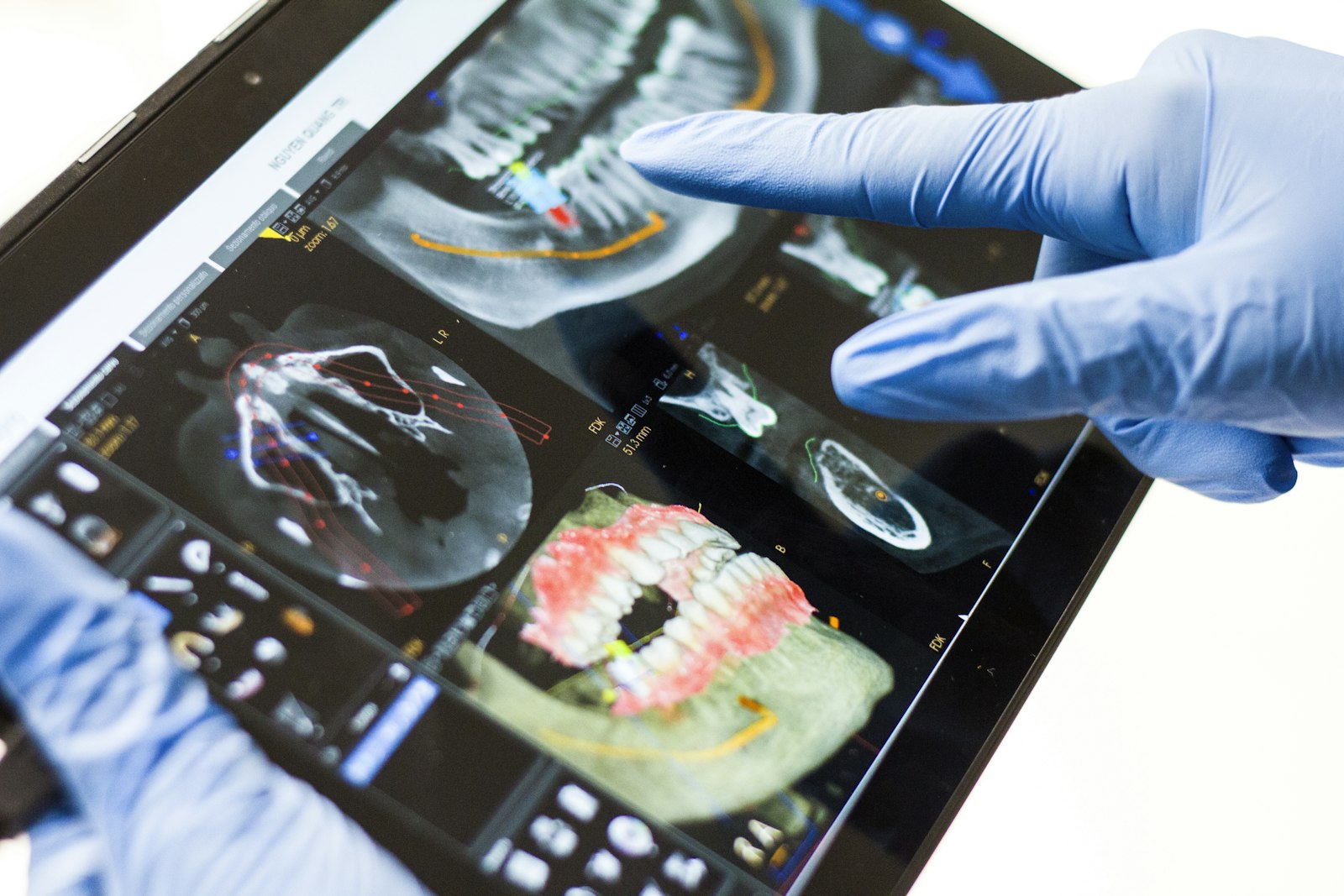
- Planning: In addition to X-rays, 3D dental tomography is used when needed to determine the number and direction of the canals and where the blockage is.
- Isolation: The tooth is isolated from saliva with a rubber dam.
- Working under magnification: The canal entrance is searched for carefully with ultrasonic tips under magnification and good lighting.
- Opening the canal: The canal is opened gradually with very thin, flexible instruments, then cleaned and shaped.
- Filling and restoration: The canal is filled and the tooth is protected with a suitable filling, onlay or crown.
Working carefully and patiently in narrow and curved canals reduces the risk of complications such as instrument breakage and perforation.
What if the canal cannot be opened?
In some teeth it may not be possible to reach the whole canal. If there is no inflammation at the root tip, the part that can be opened is treated and the tooth is monitored. If inflammation persists, an apicoectomy may be an option. When the tooth cannot be saved, extraction and replacing the missing tooth are discussed.
What affects the cost?
The cost depends on the position of the tooth, the number of canals, the degree of blockage, whether tomography is needed and the restoration that follows. We share the plan that suits you and its cost clearly after the examination and X-ray assessment.
Frequently asked questions
How do you know a canal is blocked?
On an X-ray the canal may look very thin or not be visible at all. When needed, 3D dental tomography is used for a more precise assessment.
Can root canal treatment be done on a tooth with blocked canals?
In most cases, yes. With magnification and careful planning, the canal entrance is located and the canal is opened. If it cannot be opened, other options are considered.
Why does a tooth with a calcified canal change colour?
When calcification occurs inside the tooth after a knock, the tooth can gradually turn yellowish. If there is no pain or inflammation, colour change alone may not require root canal treatment.
How many sessions does treatment take?
One or several sessions depending on the condition of the tooth. In narrow canals the procedure may take longer than usual.
If the canal cannot be opened, is the tooth extracted?
Not always. If there is inflammation at the root tip, an apicoectomy may be an option. The decision is made together based on the condition of the tooth.
Root canal treatment examination in Bursa
For a tooth said to have a blocked canal, or a tooth that has changed colour, the right path is decided with an examination and X-rays. You can book an appointment at our two branches in Bursa:
Korupark Branch (Osmangazi): +90 224 243 00 44 · WhatsApp +90 532 497 11 17
Ataevler Branch (Nilüfer): +90 224 503 66 00 · WhatsApp +90 552 503 66 00
Korudiş Dental Team
This article is for general information; the right treatment for you can only be decided by your dentist after an examination.