
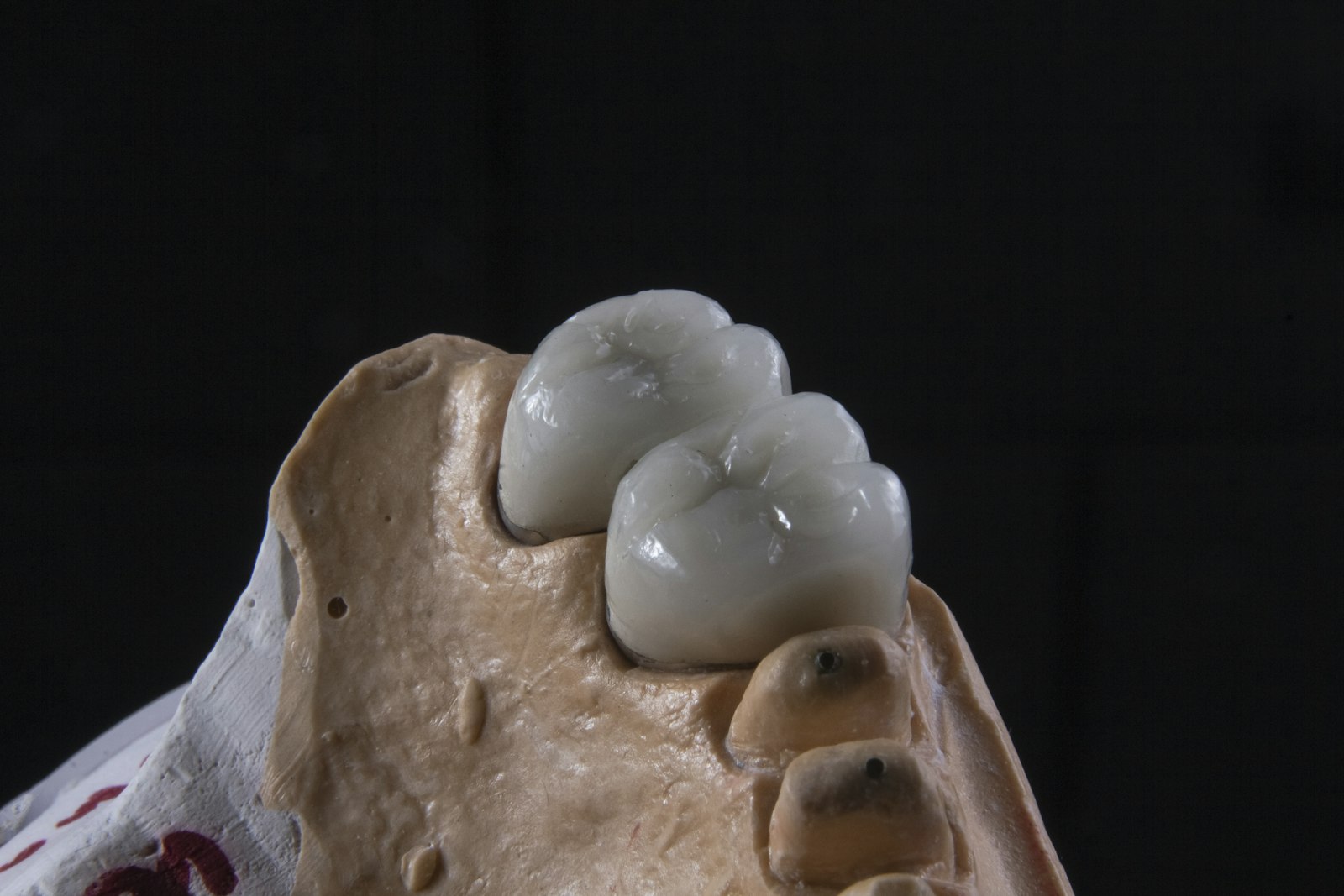
If your dentist has recommended a “fixed prosthesis” for broken, heavily filled or missing teeth, you may be wondering what this means. A fixed prosthesis is the general name for prostheses that are not taken out of the mouth; they are cemented or screwed onto teeth or implants. The two best-known types are the crown (cap) and the bridge. In this article we answer the questions we are asked most often at our Korupark and Ataevler branches in Bursa.
What is a fixed prosthesis?
Prostheses fall into two main groups. Removable prostheses are put in and taken out by the patient; a complete denture is an example. Fixed prostheses are permanently attached to a tooth or an implant and can only be removed by the dentist.
A fixed prosthesis makes chewing easier, helps stop the teeth next to a gap from drifting into it and completes the appearance of the smile.
When is a crown needed?
A crown is a cap that covers the tooth from the outside. It may be recommended when:
- A large part of the tooth has been lost to decay or a fracture.
- The tooth has very large fillings or fillings that keep falling out.
- The risk of fracture of a back tooth that has had root canal treatment needs to be reduced.
- The appearance of a discoloured or misshapen tooth is to be corrected.
If the loss is more limited, an onlay or overlay is also an option.
How does a bridge work?
A bridge replaces one or more missing teeth. The teeth on either side of the gap are used as supports and are crowned; the artificial tooth (pontic) that replaces the missing tooth is joined to these two crowns. This creates a single-piece structure that is cemented onto the teeth.
The downside of a bridge is that the supporting teeth need to be reduced. If the supporting teeth are healthy and unfilled, whether an implant would be more suitable is also considered. We compare the two in detail in our “Implant or bridge?” article.
Implant-supported fixed prosthesis
When a tooth is missing, a crown or bridge can be made on an implant without touching the neighbouring teeth. This is also a fixed prosthesis. You can find the types in our “Implant-supported prosthesis” article.
Which materials are used for fixed prostheses?
- Porcelain fused to metal: A long-established, durable option. If the gum recedes, a dark line may show at the edge.
- Zirconia: Contains no metal, is tooth-coloured and withstands the chewing forces on back teeth.
- All-ceramic (for example e.max): Lets light through similar to a natural tooth and is often preferred for front teeth.
The material is chosen together based on the position of the tooth, chewing forces, aesthetic expectations and any teeth-clenching habit.
How is a fixed prosthesis made?
- Examination and X-ray: The root of the tooth and the surrounding bone are checked. If needed, root canal or gum treatment is done first.
- Preparing the teeth: Under local anaesthesia, the teeth are shaped so the crown can sit on them.
- Impression: A conventional impression or a digital impression with an intraoral scanner is taken.
- Temporary crown: The teeth are protected with a temporary crown until the permanent prosthesis is ready.
- Try-in: Fit, colour and bite are checked in the mouth.
- Cementation and check: The prosthesis is cemented and the bite is adjusted one last time.
Caring for a fixed prosthesis
- Brush twice a day, paying attention to the edge where the crown meets the gum.
- Clean under the bridge with an interdental brush or a special bridge floss.
- Do not crack nuts with your teeth, and be careful with very hard and sticky foods.
- If you clench your teeth at night, tell your dentist; a night guard can protect the prosthesis.
- Come for a check-up at least once a year.
How long does a fixed prosthesis last?
Well-planned and well-cared-for fixed prostheses can be used for many years. Their lifespan depends mostly on new decay forming at the crown edge, gum health and teeth clenching. That is why cleaning and regular check-ups are as important as the choice of material.
What affects the cost of a fixed prosthesis?
The cost depends on how many teeth will receive crowns or bridges, the material chosen and whether root canal or gum treatment is needed beforehand. We share the plan that suits you and its cost clearly after the examination.
Frequently asked questions
Are healthy teeth reduced for a bridge?
Yes, the teeth used as supports need to be reduced. If the supporting teeth are healthy, an implant is also discussed as an option.
Does a tooth that will get a crown need root canal treatment?
Not always. If the nerve of the tooth is inflamed or the decay is deep, root canal treatment is done first; if the nerve is healthy, it may not be needed.
Can a fixed prosthesis come off?
A fixed prosthesis is attached with a strong cement. Rarely it may loosen; if this happens, keep the prosthesis and come to your dentist.
How do I clean under a bridge?
With an interdental brush or a special floss that can be threaded under the bridge. Your dentist will show you how to use it at the first check-up.
Fixed prosthesis or implant?
The condition of the neighbouring teeth, the amount of bone and your general health decide. If the neighbouring teeth already need crowns, a bridge may be preferred; if they are healthy, an implant may come forward.
Fixed prosthesis examination in Bursa
Which fixed prosthesis suits broken, heavily filled or missing teeth is decided at the examination. You can book an appointment at our two branches in Bursa:
Korupark Branch (Osmangazi): +90 224 243 00 44 · WhatsApp +90 532 497 11 17
Ataevler Branch (Nilüfer): +90 224 503 66 00 · WhatsApp +90 552 503 66 00
Korudiş Dental Team
This article is for general information; the right treatment for you can only be decided by your dentist after an examination.