
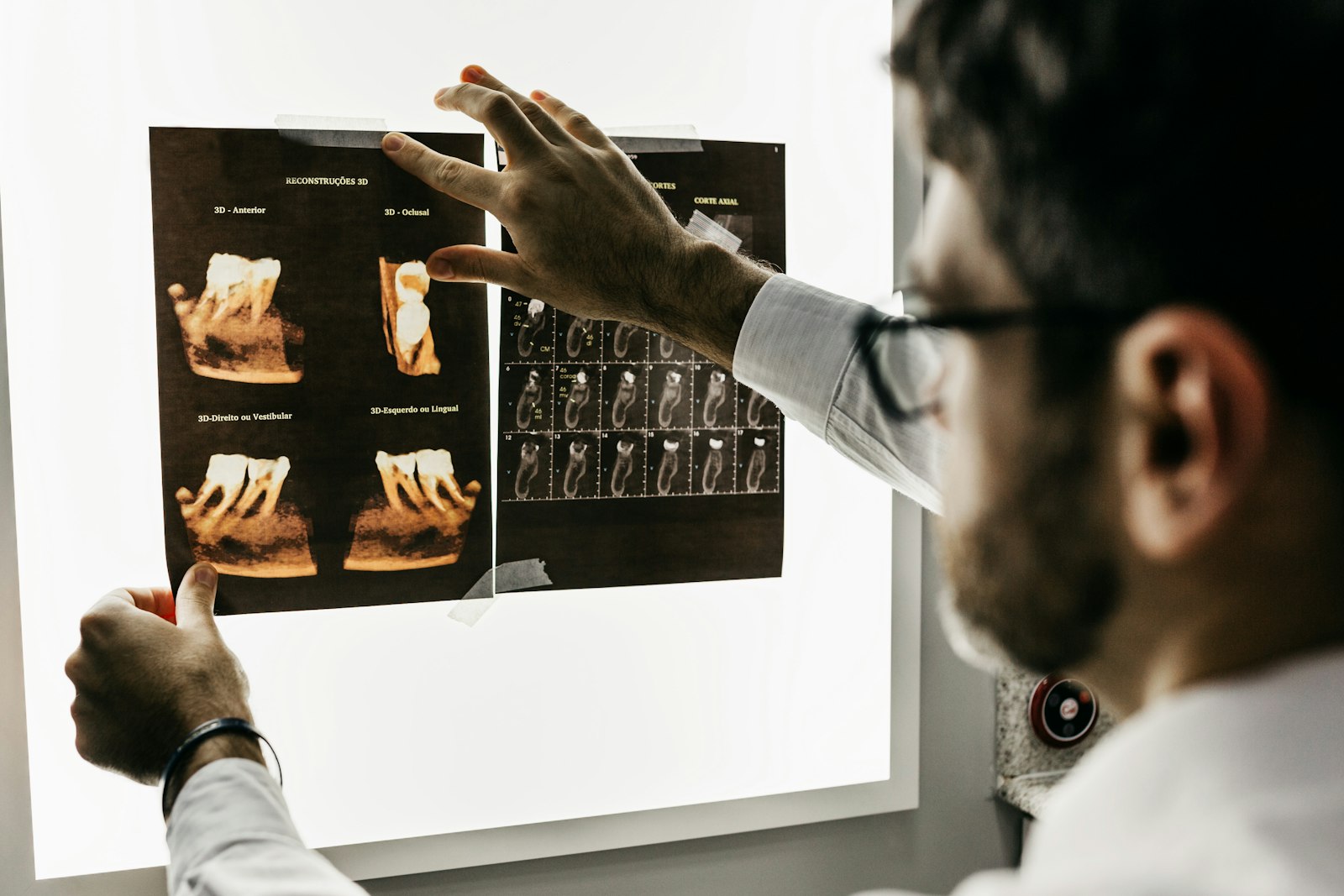
In a tooth that has had root canal treatment, inflammation at the root tip sometimes does not heal. Root canal re-treatment is usually the first choice, but in some teeth the root tip cannot be reached through the canal. In this case, one of the options is an apicoectomy, also known as root-end resection or apical surgery. In this article we answer the questions we are asked most often at our Korupark and Ataevler branches in Bursa.
What is an apicoectomy?
An apicoectomy is a minor surgical procedure in which the root tip is reached through the gum. The inflamed tissue around the root tip is cleaned away, the last few millimetres of the root are removed, and the root end is sealed with a biocompatible filling material. The aim is to keep the tooth in the mouth without extracting it and to allow the bone to heal.
When is it needed?
An apicoectomy is usually considered when the problem cannot be solved with root canal treatment or root canal re-treatment:
- Inflammation (a lesion) at the root tip that persists despite root canal treatment
- A post or crown in the canal that would be risky to remove
- A broken instrument that cannot be removed or a blockage that cannot be passed
- A canal or root anatomy at the root tip that cannot be reached with root canal treatment
- Situations where a tissue sample from the root tip is needed for diagnosis
It is not suitable for every tooth. If there is a vertical root fracture, very little bone support or a very short root, other options may be better. These decisions are made with X-rays and, when needed, 3D dental tomography (CBCT).
How is an apicoectomy done?
- Planning: The position of the root tip and the size of the lesion are assessed with X-rays and, if needed, tomography.
- Numbing: The area is numbed with local anaesthesia.
- Reaching the root tip: The gum is lifted through a small incision and the thin bone over the root tip is opened.
- Cleaning and resection: The inflamed tissue is removed and a few millimetres of the root tip are cut away.
- Sealing the root end: The root end is prepared under magnification and filled with a biocompatible material such as MTA.
- Stitches: The gum is put back in place and stitched.
What to pay attention to after surgery
- Apply a cold compress to your cheek at intervals on the first day.
- Eat soft, lukewarm foods on the first day and do not chew on that side.
- Do not brush the stitched area; brush your other teeth as usual.
- Do not smoke; it slows healing.
- Take the medicines your dentist recommends as directed.
- If swelling keeps increasing, or you have a fever or bleeding that does not stop, call our branch without waiting.
Mild swelling and bruising are normal for the first few days. Complete healing of the bone takes months and is monitored with follow-up X-rays.
Apicoectomy or extraction?
When the natural tooth can be saved, an apicoectomy can achieve a result with less intervention than extracting the tooth and replacing it with an implant or bridge. However, when the tooth cannot be saved in the long term, extraction may be the better choice. The condition of the tooth decides which path is right; we also discuss this in our root canal or extraction article.
What affects the cost of an apicoectomy?
The cost depends on the position of the tooth, the number of roots, the size of the lesion and whether root canal re-treatment is needed beforehand. We share the plan that suits you and its cost clearly after the examination and X-ray assessment.
Frequently asked questions
Does an apicoectomy hurt?
The procedure is done under local anaesthesia; most people only feel pressure during it. There may be mild pain and swelling for a few days afterwards, controlled with the painkiller your dentist recommends.
How long does an apicoectomy take?
It depends on the position of the tooth and the number of roots; most procedures are completed in a single session. Front teeth usually take less time than back teeth.
When are the stitches removed?
If non-dissolving stitches are used, they are usually removed after about a week. Your dentist will set the follow-up appointment.
Wouldn’t it be simpler to extract the tooth?
Extraction is also an option, but the extracted tooth then needs to be replaced with an implant, bridge or denture. When the natural tooth can be saved, an apicoectomy is considered among these options.
How do we know it has healed?
Symptoms going away is the first sign. The bone heals over months and is monitored with follow-up X-rays.
Apicoectomy examination in Bursa
For pain, swelling or root-tip inflammation that persists despite root canal treatment, the right path is decided with an examination and X-rays. You can book an appointment at our two branches in Bursa:
Korupark Branch (Osmangazi): +90 224 243 00 44 · WhatsApp +90 532 497 11 17
Ataevler Branch (Nilüfer): +90 224 503 66 00 · WhatsApp +90 552 503 66 00
Korudiş Dental Team
This article is for general information; the right treatment for you can only be decided by your dentist after an examination.