
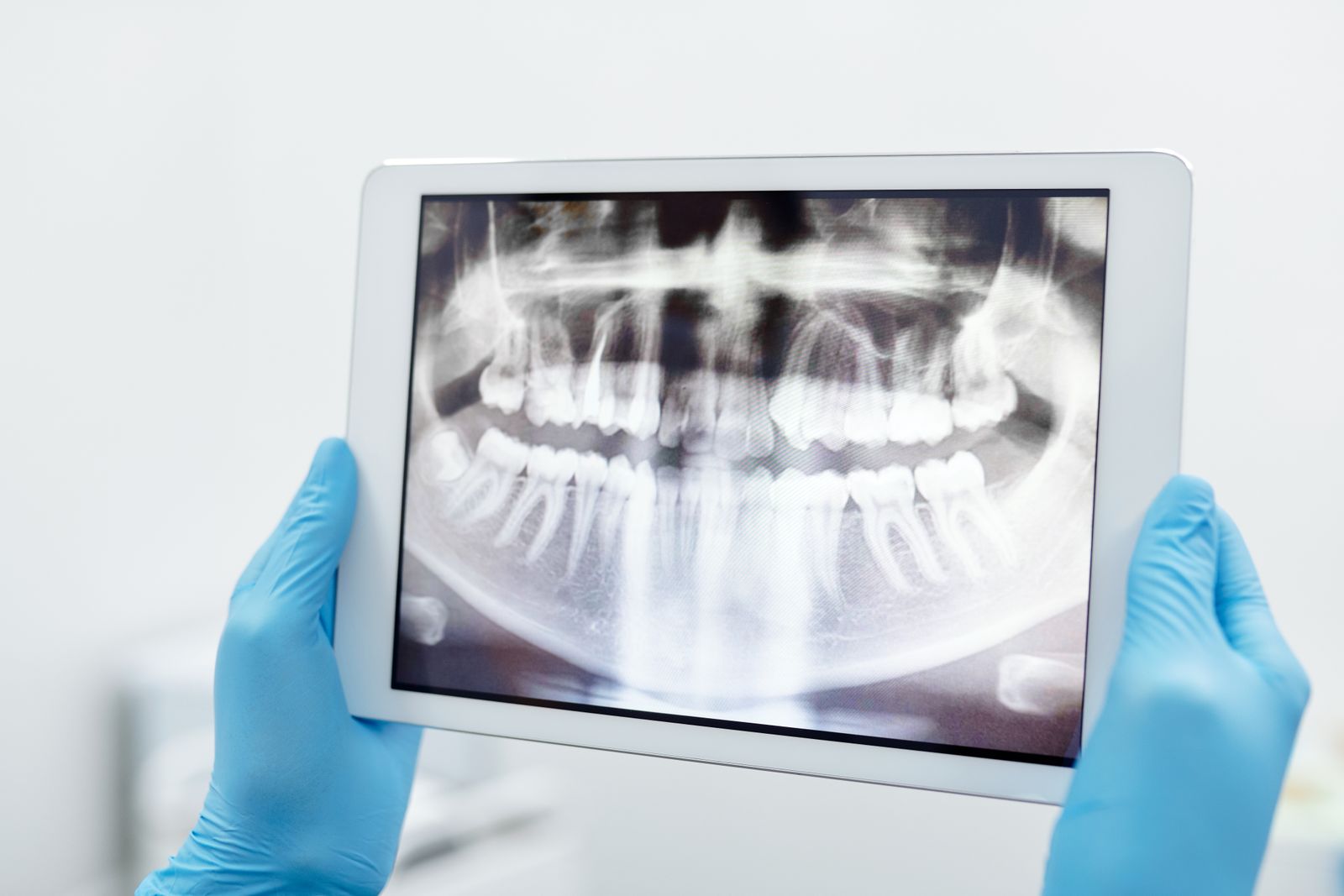
The third molars at the very back of the mouth, which usually come through between the ages of 17 and 25, are called wisdom teeth. When there is not enough room in the jaw, these teeth may not come through fully, may grow in at an angle or may stay buried in the bone (impacted).
In short
- Not every wisdom tooth needs to be removed.
- Extraction is recommended if there is pain, swelling, recurring infection, decay or damage to the neighbouring tooth.
- The decision is made with a panoramic X-ray or a CT scan.
- Extraction is done under local anaesthetic; healing usually progresses noticeably within a few days.
Which signs point to a problem?
- Recurring pain in the area of the back teeth
- Swelling and inflammation of the gum over the tooth (pericoronitis)
- Difficulty opening the mouth
- A bad smell or taste
- Decay or sensitivity in the tooth in front
When is extraction recommended?
- Recurring gum inflammation
- Decay in the wisdom tooth itself or in the neighbouring tooth
- Pressure on the root of the neighbouring tooth
- A cyst forming around the tooth
- When required by an orthodontic treatment plan
How is the extraction done?
- Examination and imaging: The position of the tooth and how close it is to the nerve are assessed.
- Numbing: The area is numbed with local anaesthetic.
- Extraction: If needed, the gum is opened and the tooth is removed in sections.
- Stitches: If needed, the area is closed with stitches; they are removed after about a week.
After the extraction
- Bite on the gauze pad for 30–40 minutes.
- On the first day, apply a cold compress to your face at intervals.
- For the first 24 hours, don’t rinse vigorously, drink through a straw or spit.
- Don’t smoke.
- Take the medicines your dentist recommends regularly.
Frequently asked questions
Should every wisdom tooth be removed?
No. Wisdom teeth that have come through properly, can be cleaned and cause no problems can stay. The decision is based on an examination and X-ray.
How long does recovery take after wisdom tooth removal?
Swelling and tenderness are usually greatest in the first 2–3 days and ease noticeably within a week. Complete healing of the tissues can take a few weeks.
When can I eat after the extraction?
Once the numbness wears off, you can eat lukewarm, soft foods. On the first day, avoid hot, hard and spicy foods.
Wisdom tooth removal at Korudiş
At our branches, wisdom tooth extractions are planned with an examination and X-rays, and cases requiring oral and maxillofacial surgery are treated by our specialist. For details, see our implants and oral surgery page or book an appointment.
This article is for general information. A personal diagnosis and treatment plan require an examination.
This article has been medically reviewed by Dt. İlhan Şirin. · November 2026