
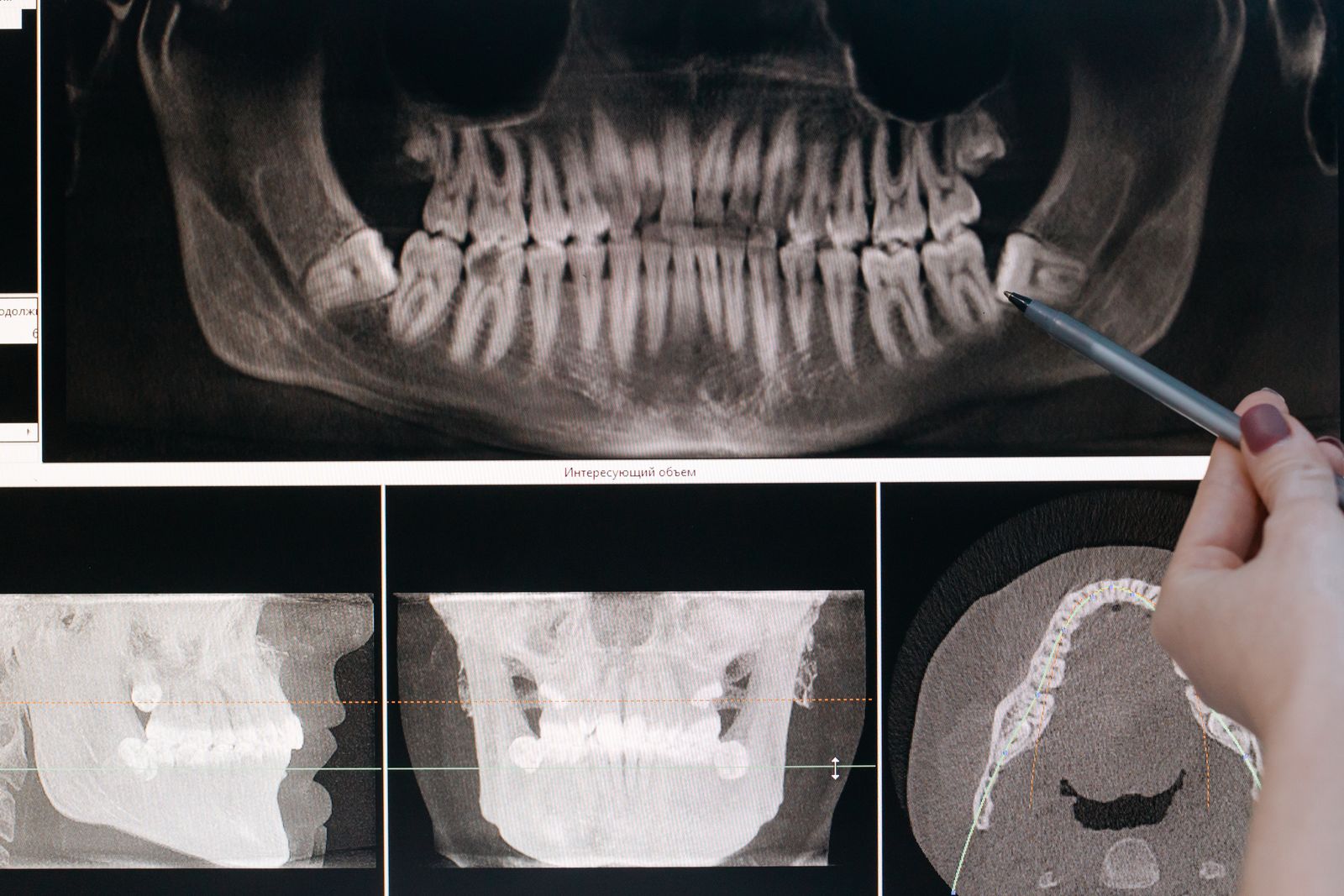
For an implant to stay stable for many years, the jawbone needs to be high and wide enough. Waiting a long time after an extraction, gum disease or accidents can cause the bone to shrink. In such cases, bone grafting prepares a solid base for the implant.
In short
- Bone grafting means placing bone graft material in an area where bone is missing.
- The aim is to provide enough bone volume for the implant to sit in.
- It is sometimes done in the same session as the implant, and sometimes as a separate procedure beforehand.
- The bone usually takes a few months to mature.
Why does bone shrink?
- After a tooth is extracted, the area no longer receives chewing forces, so the bone thins over time.
- Advanced gum disease reduces bone support.
- Wearing removable dentures for a long time can speed up bone loss.
- Cysts, infection or trauma can also cause bone loss.
Types of bone grafting
Bone graft placement
Graft material in powder or granule form is placed in the area lacking bone and covered with a protective membrane. Over time, this material is replaced by the person’s own bone.
Sinus lift
In the area of the upper back teeth, the bone may be thin because of the sinus cavity. The sinus membrane is gently lifted and graft is placed underneath to make room for the implant.
Socket preservation after extraction
Placing graft in the socket at the time of extraction can reduce future bone loss.
How is the procedure done?
- Examination and 3D CT scan: The height and width of the bone are measured.
- Planning: The type of graft is chosen and it is decided whether the implant will be placed in the same session.
- Placement: The graft is placed under local anaesthetic and the area is closed with stitches.
- Healing: There is usually a wait of a few months for the bone to mature.
- Implant: When the bone is ready, the implant is placed.
After the procedure
- Apply a cold compress on the first day and avoid hot and hard foods.
- Don’t blow your nose hard; this is especially important after a sinus lift.
- Smoking harms healing; stop if you can.
- Come to your follow-up appointments.
Frequently asked questions
Is bone grafting painful?
Because the procedure is done under local anaesthetic, pain is usually not felt during it. There may be swelling and tenderness for a few days afterwards; this is managed with the medicines your dentist recommends.
Can the body reject bone graft material?
Graft materials are made to be compatible with body tissue. Over time, the material is replaced by the patient’s own bone. Your dentist decides which material will be used.
Can the graft and implant be done in the same session?
If bone loss is small, often yes. If it is greater, the graft is placed first and the implant is placed after the bone has matured.
Bone grafting at Korudiş
At our Korupark and Ataevler branches, implant and bone graft planning is based on an examination and imaging. For details, see our implants and oral surgery page or book an appointment.
This article is for general information. A personal diagnosis and treatment plan require an examination.
This article has been medically reviewed by Dt. İlhan Şirin. · November 2026