
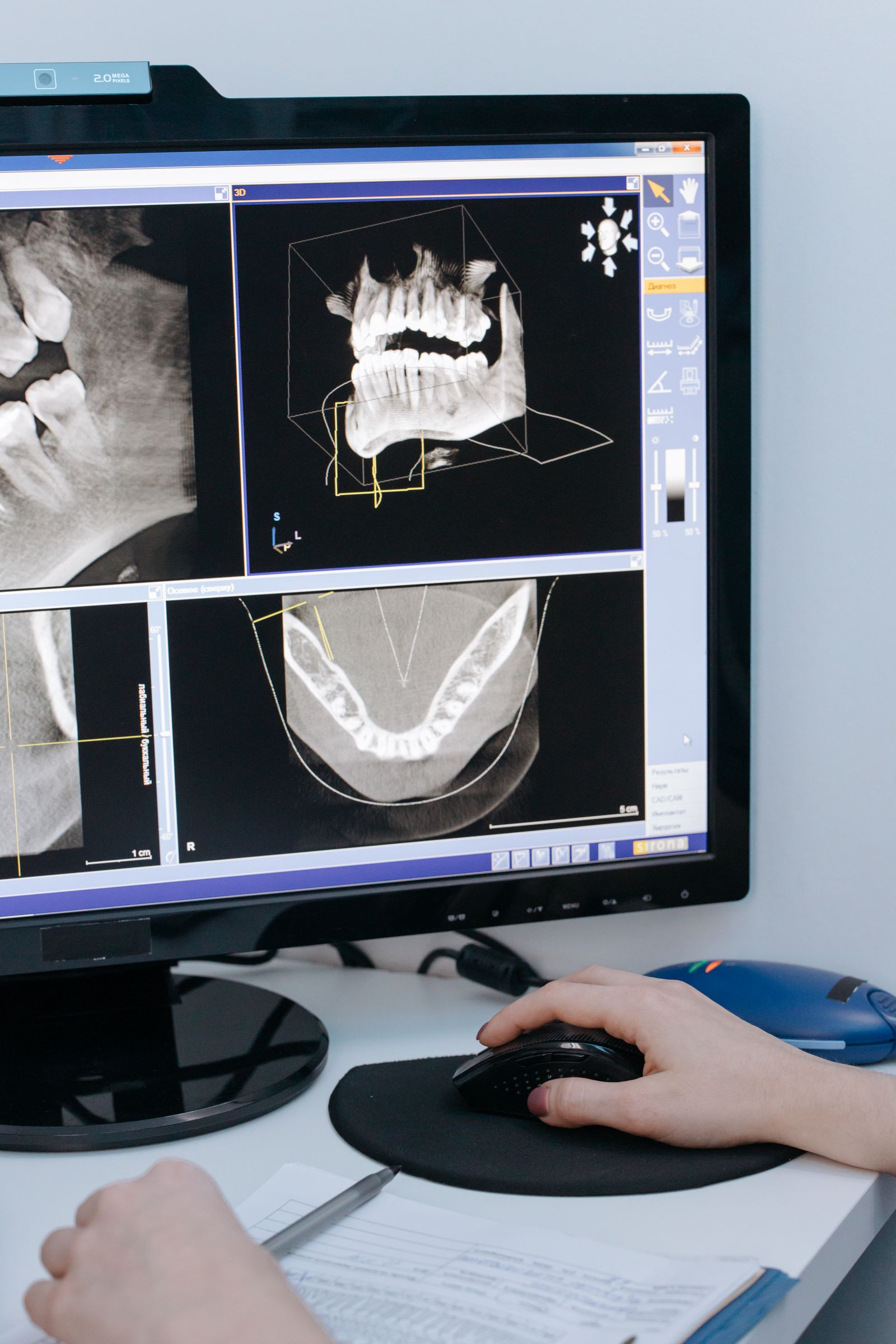
Impression trays, film X-rays and plaster models are increasingly being replaced by computer-aided tools. Digital dentistry is a broad approach in which your mouth is recorded digitally and treatment is planned and produced on a computer. Here we explain the main applications, what they offer you and their limits.
What is digital dentistry?
Put simply, it means using digital tools during examination, records, planning and production. The aim is not to show off technology but to plan treatment more predictably and explain the plan more clearly. Digital tools support, but do not replace, the dentist’s examination and experience.
Main digital applications
Intraoral scanning (digital impressions)
A pen-sized scanner is moved over the teeth and a 3D model appears on screen within minutes. No impression material is used, which many people with a gag reflex find more comfortable. The scan can be used for zirconia crowns, inlays and onlays, Maryland bridges and clear aligners.
Digital X-rays and 3D CT
Digital X-rays appear on screen immediately, can be enlarged and shown to you. Where bone volume matters, as with implants, cone beam CT (CBCT) allows the jaws to be examined in 3D. CT is taken when needed, not routinely for everyone.
Digital implant planning
CT and scan data can be combined on the computer to plan the position and angle of the implant and the tooth that will sit on it. In some cases a surgical guide made from this plan is used. See how dental implant treatment is done for details.
Digital smile design
The shape and length of new teeth are planned on facial and dental photos and digital records. The plan can be shown in the mouth with a temporary trial smile (mock-up), so decisions are made together before treatment starts. Read more in our smile design article.
Computer-aided design and manufacturing (CAD/CAM)
Crowns, bridges, inlays and onlays can be designed on a computer and milled or 3D printed in a controlled way. Models, temporary teeth and night guards can be made similarly.
Digital records and follow-up
Because scans and photos are archived, changes such as gum recession, wear or tooth movement can be compared over time.
What are the benefits for you?
- Comfort: impression material and trays may not be needed.
- Clear planning: you can see your teeth and the plan on screen together.
- Predictability: implant and cosmetic treatments can be planned in detail in advance.
- Fewer repeats: digital records go straight to the laboratory, reducing the risk of loss or distortion.
What are the limits?
- Digital tools do not replace the examination or the dentist’s judgement.
- Scanning can be difficult for margins deep below the gum or in bleeding areas; a conventional impression may then be preferred.
- Not every case needs CT or a surgical guide; unnecessary scans are avoided.
- A design on screen is a plan; the result can vary with your teeth and tissues.
Digital planning is especially useful when several specialties work together. Our multidisciplinary dental treatment article explains this process.
Frequently asked questions
Is an intraoral scan painful?
No. A small camera is moved over the teeth. Because no impression material is used, people with a strong gag reflex usually find it more comfortable.
Do digital X-rays and CT scans involve radiation?
Yes, at low doses. Digital X-rays usually need a lower dose than older film systems. A CT scan is taken only when it is genuinely needed, for example for implant planning.
Is a digital method used in every treatment?
No. Digital tools help with planning and treatment but are not needed in every case. Your dentist decides which steps are useful after the examination.
Can I see the result in advance with digital smile design?
A design based on photos and digital records, together with a trial smile (mock-up) in the mouth, lets you see the planned change in advance. It is a planning tool; the final result can vary with your teeth and gums.
Does a digital impression completely replace a conventional one?
In many treatments it can. In some situations, such as margins deep below the gum or certain complete dentures, a conventional impression may still be preferred.
Digital planning examination in Bursa
Which digital steps are useful in your treatment is decided after an examination. You can book an appointment at either of our branches in Bursa:
Korupark Branch (Osmangazi): +90 224 243 00 44 · WhatsApp +90 532 497 11 17
Ataevler Branch (Nilüfer): +90 224 503 66 00 · WhatsApp +90 552 503 66 00
Korudiş Dental Team
This article is for general information; the right treatment for you can only be decided by your dentist after an examination.
You can find the profile of our dentist with an interest in digital dentistry and prosthetics on the Dt. İlhan Şirin page.