
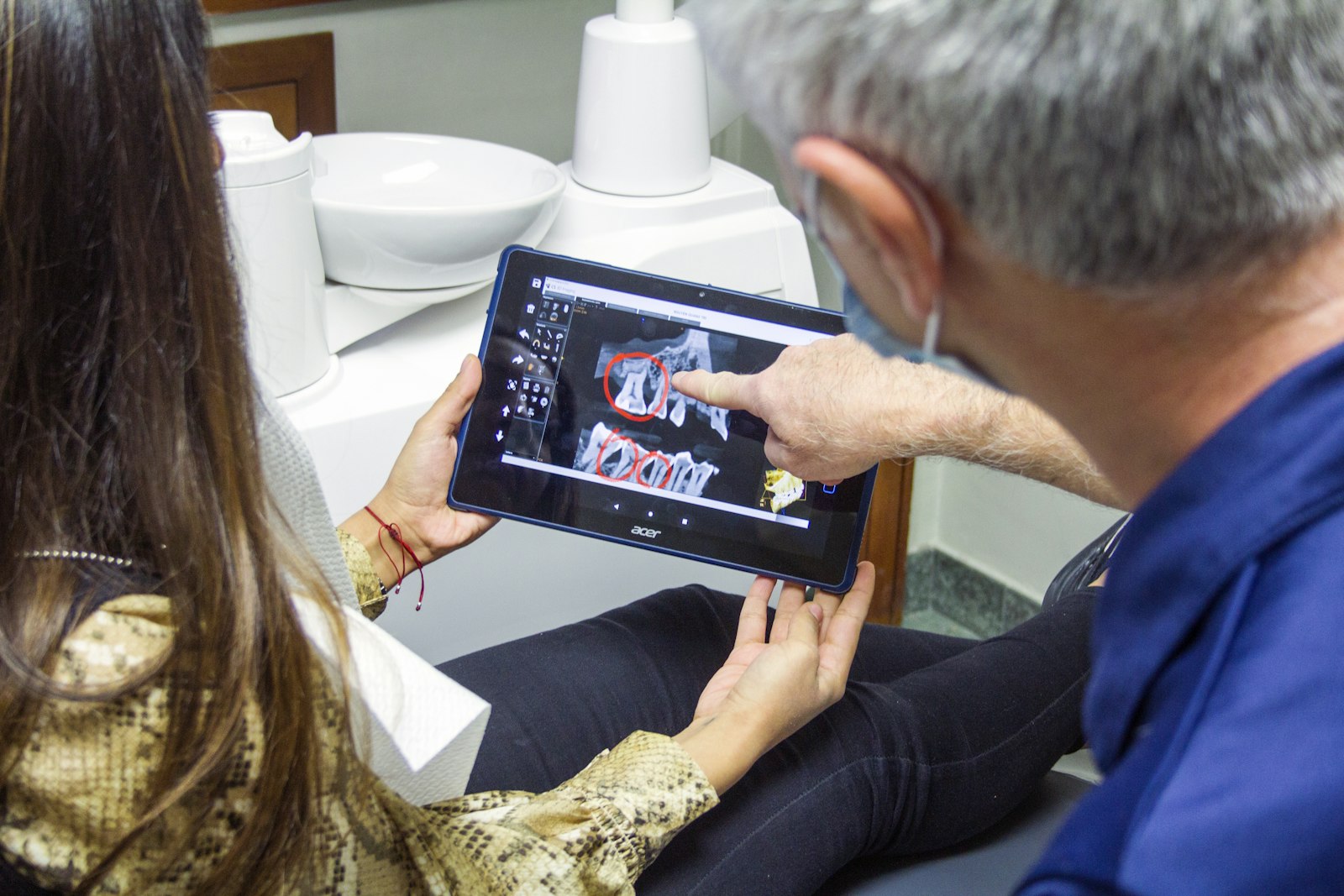
Multidisciplinary dental treatment means different specialties, such as orthodontics, gum treatment, root canal treatment, surgery and prosthetics, working together around a single plan when several problems exist in the mouth at the same time. When missing teeth, crowding, gum recession and old crowns all occur together, trying to solve each problem separately and in no particular order often does not give the expected result. In this article we explain for our patients in Bursa what comprehensive treatment planning is and why it matters.
What is multidisciplinary planning?
In dentistry, each specialty focuses on a different part of the mouth: the orthodontist on the alignment of the teeth, the periodontist on the gums and bone, the endodontist on the tooth’s nerve, the surgeon on implants and bone, and the prosthodontist on the final chewing and aesthetic structure. Multidisciplinary planning means bringing these perspectives together before treatment starts and planning all the steps in the right order.
The aim is to address not just a single tooth but the mouth as a whole: chewing, bite, gum health and the smile together.
Who needs it?
- People with more than one missing tooth who also have crowding or a bite problem
- People whose teeth have become loose or drifted because of gum disease
- People whose old fillings and crowns are to be replaced and who also have aesthetic expectations
- People with signs of tooth wear, fractures or grinding (teeth grinding and bruxism)
- Patients who have not had treatment for a long time and have built up many problems in their mouth
How is the planning done?
1. Detailed examination and records
Alongside the intraoral examination, X-rays, a 3D CT scan if needed, intraoral scans and photographs are taken. Gum measurements and a bite analysis are done.
2. Joint assessment
The records are assessed together with the dentists involved. For example, this is where it is discussed whether straightening the teeth with orthodontics before an implant would give a better result, or whether a tooth should be saved with root canal treatment or extracted and replaced with an implant.
3. Seeing the result from the start
If there are aesthetic expectations, the intended result can be planned in advance with digital smile design. This guides both the dental team and the patient.
4. A staged treatment plan
The plan is explained to the patient with its stages and estimated timings. The patient makes their decision knowing all the options.
In what order is treatment done?
The order can differ for each patient, but a general logic is followed:
- Urgent problems and infection control: pain, abscesses and teeth that cannot be saved are dealt with first
- Gum treatment: gum disease is brought under control for a solid foundation (tartar removal and bleeding gums)
- Root canal treatment and fillings: teeth that can be saved are treated (what is root canal treatment)
- Orthodontics: if needed, the teeth are moved to the ideal position for implants or prosthetics (types of braces)
- Surgical stage: procedures such as implants and bone grafting are done
- Final prosthetics and aesthetics: crowns, bridges or implant-supported prostheses are completed (fixed prosthesis, crowns and bridges)
- Maintenance: the result is protected with regular check-ups and, if needed, a night guard
Thanks to this order, situations such as a crown causing problems soon after being made while gum inflammation is still ongoing, or an implant placed before orthodontics ending up in the wrong position later, are avoided.
Benefits for the patient
- Problems are solved as a whole, not piece by piece
- Unnecessary or repeated procedures are avoided
- The treatment time and stages are known from the start
- The result is more predictable in terms of both function and aesthetics
Frequently asked questions
How long does multidisciplinary treatment take?
Depending on the procedures, it can vary from a few months to more than a year. Plans involving orthodontics or implants in particular take longer. The estimated time is explained to you at the planning stage.
Do I need to go to each dentist separately?
The plan is prepared within a single framework and the stages are carried out in a coordinated way. You are told from the start which dentist you will work with at which stage.
Do I have to have all the treatment at the same time?
No. The plan is divided into stages; priority treatment is done first. Some stages can be spread over time according to your needs and schedule.
Is it also needed for a purely cosmetic problem?
Not every cosmetic treatment needs multidisciplinary planning. However, if there is crowding, a gum or a bite problem beneath the smile, assessing them together gives a longer-lasting result. For details, see our article on cosmetic dentistry.
Comprehensive treatment planning in Bursa
The order and methods for solving the problems in your mouth are planned after a detailed examination and records. You can book an appointment at our two branches in Bursa:
Korupark Branch (Osmangazi): +90 224 243 00 44 · WhatsApp +90 532 497 11 17
Ataevler Branch (Nilüfer): +90 224 503 66 00 · WhatsApp +90 552 503 66 00
Korudiş Dental Team
This article is for general information; the right treatment for you can only be decided by your dentist after an examination.