
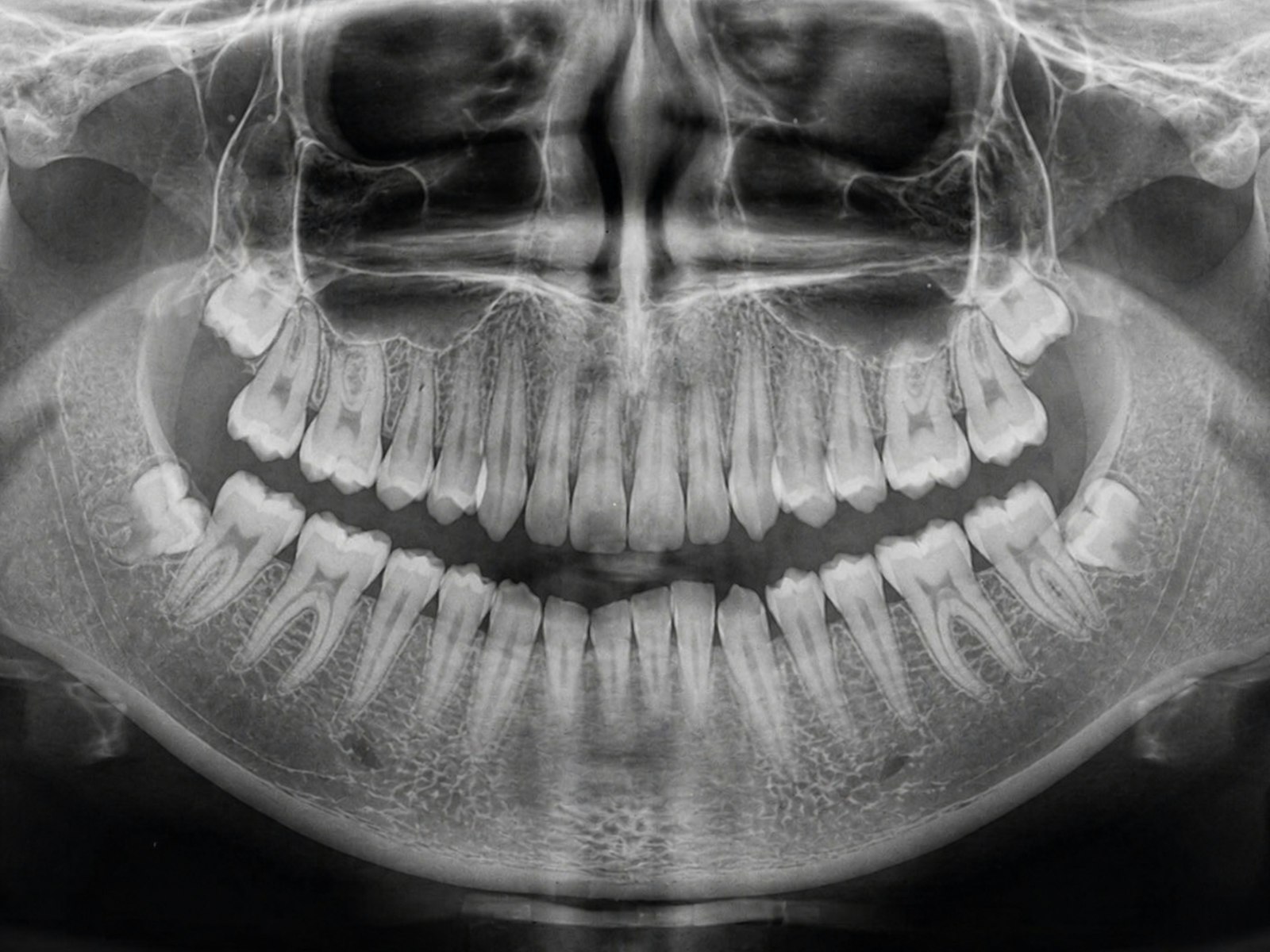
After permanent teeth come through, their roots keep developing for a few more years. If the nerve of the tooth is damaged during this period by a knock, a fracture or deep decay, root development can stop halfway. These are called teeth with open root tips, and their treatment differs from root canal treatment of teeth with fully formed roots. In this article we answer the questions we are asked most often, especially by parents of children and teenagers, at our Korupark and Ataevler branches in Bursa.
What is a tooth with an open root tip?
In a tooth whose root has finished developing, the root tip narrows and ends in a small opening. In a tooth whose development stopped halfway, the root is short, its walls are thin and its tip stays wide and open. This is why the filling materials used in conventional root canal treatment cannot stay in place at the root tip; the open tip first has to be sealed, or the root has to be helped to continue developing.
This mostly occurs between the ages of 7 and 16, after a blow to the front teeth or decay that progresses at an early age.
Which treatments are used?
Preserving the nerve (apexogenesis)
If the nerve of the tooth is still alive and only part of it is affected, the affected part is removed and the remaining healthy nerve is preserved. This allows the root to complete its development naturally. MTA or bioceramic materials are often used in these treatments.
Apexification
If the nerve is no longer alive, the canal is cleaned and the open root tip is sealed with a biocompatible material such as MTA, creating a “plug”. The rest of the canal is then filled. This method does not lengthen the root, but it allows the tooth to stay in the mouth.
Regenerative endodontics
In suitable cases, after the canal is disinfected, bleeding is induced from the root tip with the aim of allowing the root to continue developing and its walls to thicken. The outcome of this method varies from person to person and requires long-term follow-up.
Which method suits whom?
The choice depends on whether the nerve is alive, how far the root has developed, whether there is infection and the age of the child. The decision is made with X-rays and, when needed, 3D dental tomography. Whichever method is chosen, the process and the follow-up schedule are explained clearly to the family.
What to do first after a knock
- If you can find the broken piece of tooth, keep it in a clean container.
- If the tooth has come out completely, do not hold it by the root; bring it in milk or saline.
- If there is bleeding, press gently with a clean gauze pad.
- See a dentist without delay even if there is no pain, swelling or colour change. Some problems can appear months later.
For our treatments for children, see our paediatric dentistry page.
After treatment
Teeth with open root tips may be more prone to fracture because of their thin root walls. So after treatment the tooth is strengthened with a suitable filling, and the root tip is monitored regularly with follow-up X-rays. Keeping up with check-ups is important for the success of the treatment.
What affects the cost?
The cost depends on the method used, the number of sessions, the material and the restoration that follows. We share the plan that suits you and its cost clearly after the examination and X-ray assessment.
Frequently asked questions
What is a tooth with an open root tip?
After permanent teeth erupt, their roots continue to develop for a few more years. If the nerve of the tooth is damaged before this process is complete, root development stops and the root tip stays wide and open.
My child’s tooth was knocked; what should I do?
If you can find the broken piece, keep it and see a dentist without delay. If the tooth has come out completely, do not hold it by the root and bring it in milk or saline. Early treatment increases the chance of saving the tooth.
What is the difference between apexification and regenerative treatment?
In apexification, the open root tip is sealed with a biocompatible material. In regenerative treatment, the aim is for the root to continue developing and its walls to thicken. The condition of the tooth decides which is suitable.
How many sessions does treatment take?
Usually more than one session is needed; the root is then monitored with follow-up X-rays over months.
Will these teeth cause problems later?
Because of their thin root walls, these teeth may be more prone to fracture. With regular check-ups and, if needed, a suitable restoration, the aim is to keep the tooth for a long time.
Examination for teeth with open root tips in Bursa
If your child’s or your own permanent tooth has been knocked or has deep decay, an early examination increases the chance of saving the tooth. You can book an appointment at our two branches in Bursa:
Korupark Branch (Osmangazi): +90 224 243 00 44 · WhatsApp +90 532 497 11 17
Ataevler Branch (Nilüfer): +90 224 503 66 00 · WhatsApp +90 552 503 66 00
Korudiş Dental Team
This article is for general information; the right treatment for you can only be decided by your dentist after an examination.