
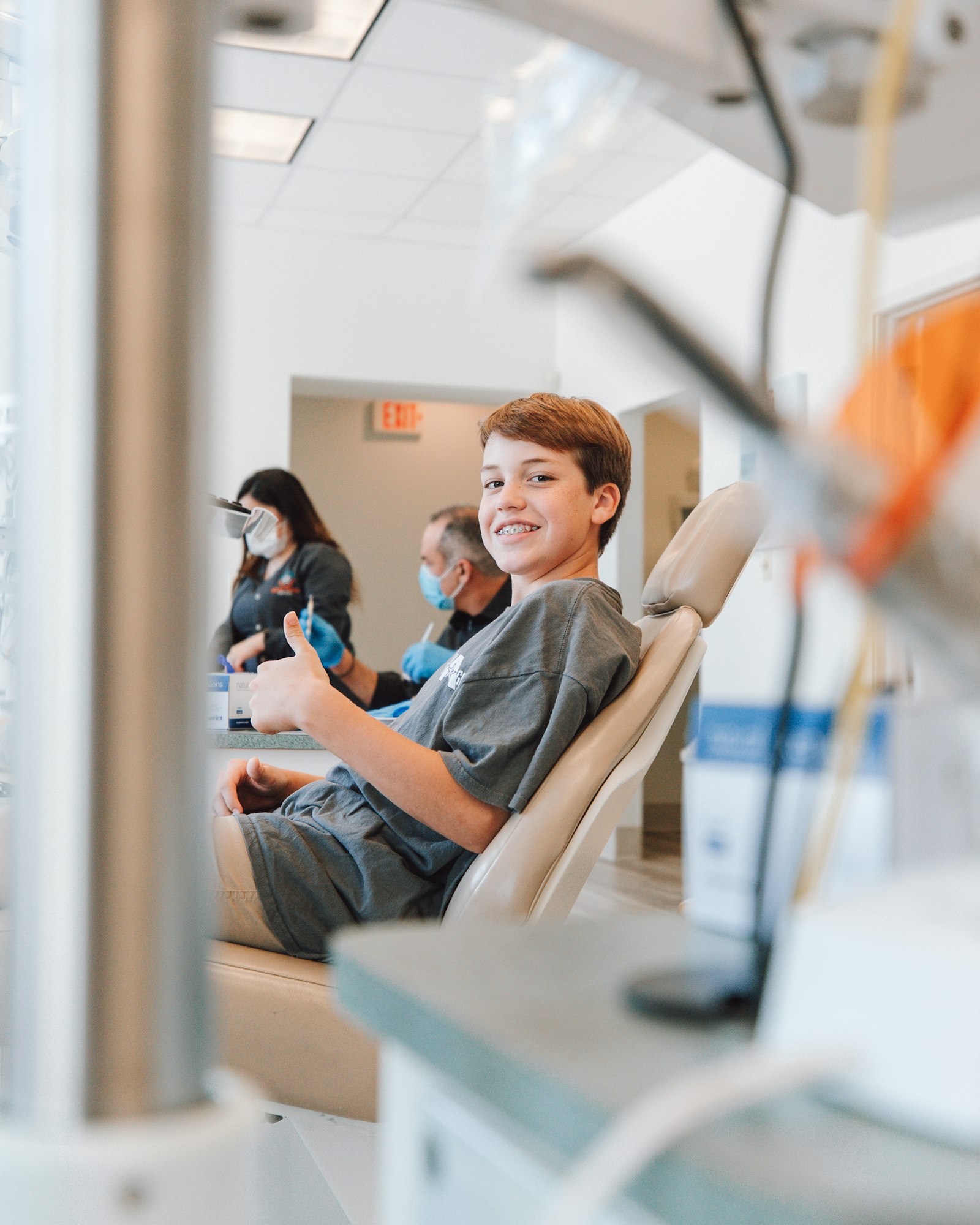
Fear of the dentist is very common in children and is often a natural anxiety about the unknown. The good news is that this fear can largely be managed with the right preparation and child-specific communication methods. In this article we explain for families in Bursa the causes of the fear, what you can do at home and the behaviour guidance techniques used by paediatric dentists.
Why are children afraid of the dentist?
- A new environment, lights, sounds and smells
- A previous painful or emergency experience
- Negative stories heard from adults (“They really hurt my tooth”)
- Parents unknowingly passing on their own anxiety
- Sentences used as punishment or a threat (“If you eat sweets, they’ll give you an injection”)
A significant part of the dental fear seen in adults is thought to start in childhood. For advice for adults, see our article on fear of the dentist.
When should the first visit be?
It is recommended that the first dental visit takes place after the first tooth comes in, usually around the age of one. It is very valuable for the first visit to be a get-to-know-you visit, without pain or a complaint. This way, the child associates the dentist not with pain but with chatting and play.
What you can do at home before the appointment
- Describe the visit with short, positive sentences: “The dentist will count your teeth and see how strong they are.”
- Avoid words like “it won’t hurt”, “injection” and “don’t be scared”; these words can bring fear to the child’s mind
- Play “dentist” at home with a doll and count teeth with a toothbrush
- Book the appointment at a time when your child is rested and has eaten
- Try not to pass your own anxiety on to your child
What methods do paediatric dentists use?
Paediatric dentists (pedodontists) use different behaviour guidance techniques according to the child’s age and personality:
- Tell–show–do: the instrument to be used is first explained in language the child understands, shown on their finger or hand, and then used
- Positive reinforcement: every cooperative step is praised
- Distraction: focus is moved away from the procedure with stories, songs or counting games
- Voice control and simple language: words from the child’s world are chosen instead of technical terms
- Gradual introduction: starting with short, easy procedures to build trust
With these methods most children can be treated comfortably in the chair. If anxiety is very intense or a lot of treatment is needed, sedation or general anaesthesia options can be considered.
The most effective method: prevention
If a child’s first experiences are short check-ups rather than painful treatments, fear is less likely to develop. Regular check-ups, fluoride applications and fissure sealants help prevent decay without the need for major treatment. For details, read our articles on preventive dentistry and brushing children’s teeth.
Frequently asked questions
Can I go into the treatment room with my child?
Usually yes, especially with young children. In some cases the child may communicate more easily with the dentist alone; this is decided together with your dentist.
Will treatment go ahead if my child cries in the chair?
Crying is a normal reaction in young children. Depending on the child’s state, the dentist decides whether to continue, take a short break or split the appointment into shorter steps.
Should I give a reward after treatment?
Small, sugar-free rewards (a sticker, a short game) can leave a positive memory. It is better not to use sweets or desserts as a reward.
What should we do if the fear is very intense?
Short get-to-know-you visits and gradual introduction are tried first. With intense anxiety and urgent treatment needs, sedation or general anaesthesia options can be discussed.
Is it wrong to tell my child “it won’t hurt”?
The sentence is well meant, but it brings the word “hurt” to the child’s mind. Using positive phrases like “We’ll count your teeth and then polish them” works better.
Your child’s first dental examination in Bursa
We recommend planning your child’s first visit without any complaint, as a get-to-know-you visit. You can book an appointment at our two branches in Bursa:
Korupark Branch (Osmangazi): +90 224 243 00 44 · WhatsApp +90 532 497 11 17
Ataevler Branch (Nilüfer): +90 224 503 66 00 · WhatsApp +90 552 503 66 00
Korudiş Dental Team
This article is for general information; the right treatment for you can only be decided by your dentist after an examination.