
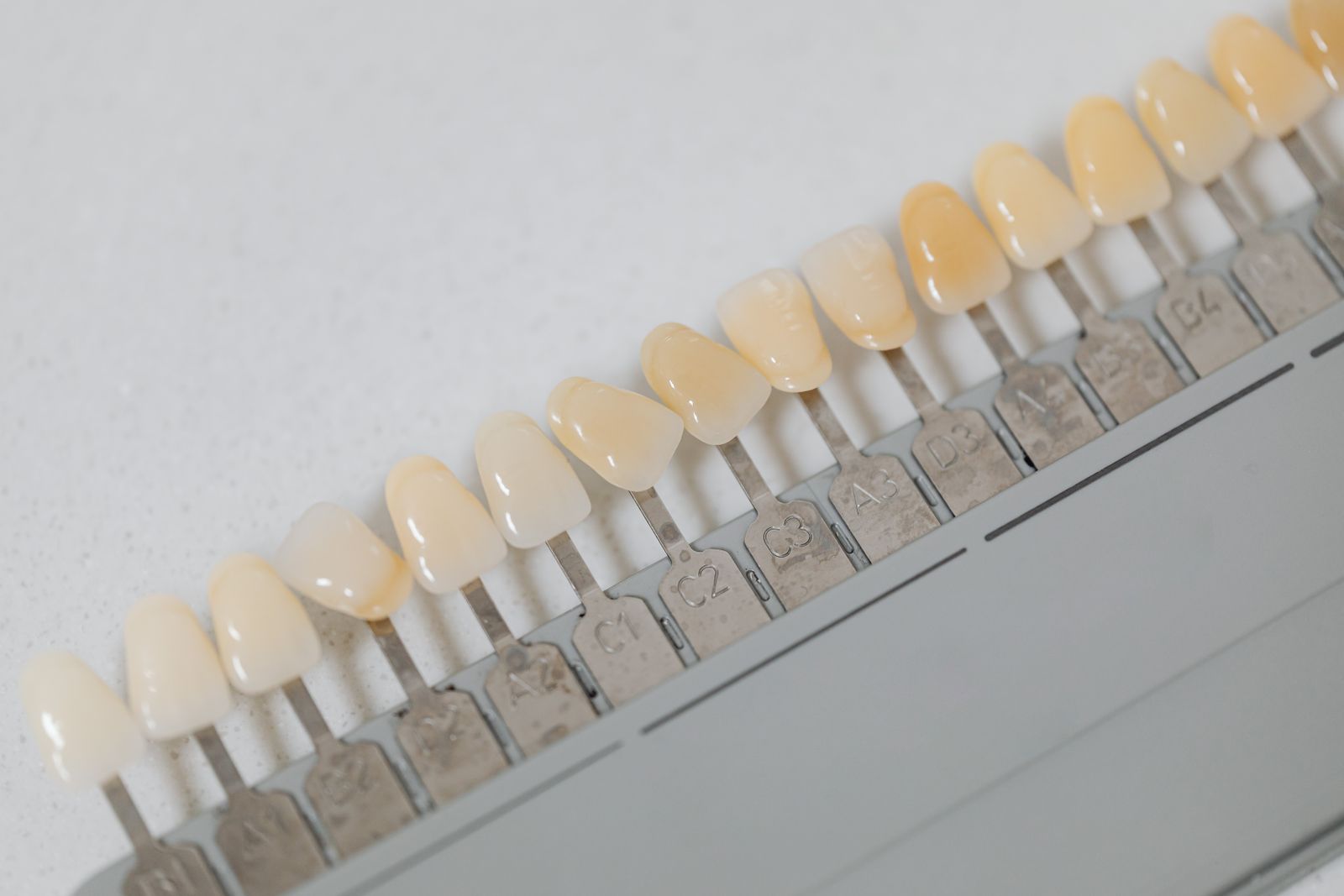
Over time, tea, coffee, smoking and age can darken the colour of your teeth. Teeth whitening uses special gels to lighten tooth colour by a few shades without wearing down the tooth surface.
In short
- Whitening lightens tooth colour without damaging tooth structure.
- There are two main methods: in-office (at the clinic) and at-home (with custom trays).
- Temporary sensitivity may occur; it usually passes within a few days.
- How long the result lasts depends on diet and care habits.
Whitening methods
In-office whitening
At the clinic, the gums are protected and a whitening gel is applied to the teeth. The result can be seen in a single session.
At-home whitening
Impressions of your teeth are taken and clear trays are made specifically for you. The gel provided by your dentist is applied at home with these trays for the recommended time. The result appears over a few days.
Combined method
Treatment can start in-office and be supported with at-home whitening. Which method suits you is decided after an examination.
Who is it not suitable for?
- People with untreated decay or gum disease (these need treating first)
- During pregnancy and breastfeeding
- People with marked tooth sensitivity (the sensitivity is treated first)
- People with many fillings or crowns on their front teeth (the result may not be even)
Will there be sensitivity?
During whitening and for a few days afterwards, there may be temporary sensitivity to cold. A toothpaste for sensitive teeth or a fluoride application may be recommended.
How long do the results last?
This varies from person to person. Cutting down on staining drinks, stopping smoking, brushing regularly and having your teeth scaled every 6 months help the result last longer.
Frequently asked questions
Why are my teeth turning yellow?
The most common causes are staining habits such as tea, coffee and smoking, tartar build-up and thinning of the enamel with age. Some medicines and previous root canal treatment can also darken a single tooth. The solution depends on the cause: sometimes scaling is enough, sometimes whitening, and sometimes a different treatment is needed.
Is whitening suitable for me?
If your teeth and gums are healthy and the discolouration is in natural tooth tissue, usually yes. If there is decay, gum disease, marked sensitivity or many fillings and crowns on the front teeth, these are assessed first. Suitability is decided after an examination.
Does teeth whitening damage the teeth?
Whitening done under a dentist’s supervision with a gel of the right strength does not permanently harm tooth enamel. Unsupervised products, however, can cause sensitivity and gum irritation.
Does whitening also whiten fillings and crowns?
No. Whitening only works on natural tooth tissue. If you have fillings or crowns on your front teeth, they may need to be replaced to match the new shade after whitening.
How long should I avoid coloured foods after whitening?
For the first 48 hours, it is recommended to avoid staining things such as tea, coffee, cola, wine and cigarettes.
Teeth whitening at Korudiş
At our branches, the teeth and gums are examined before whitening, and the method that suits you is chosen together. For details, see our cosmetic dentistry and whitening page or book an appointment.
This article is for general information. A personal diagnosis and treatment plan require an examination.
This article has been medically reviewed by Dt. İlhan Şirin. · November 2026